
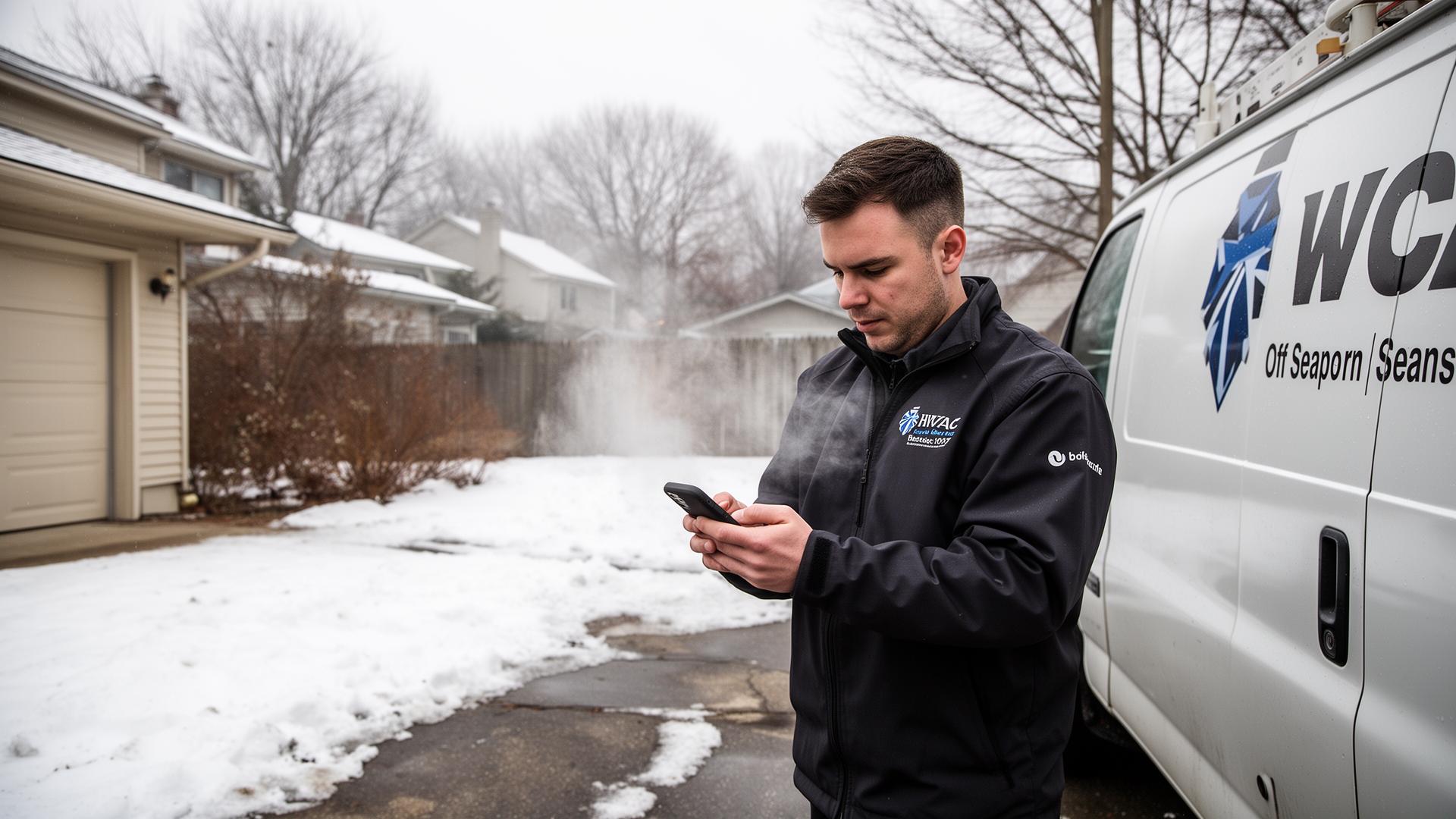
Every HVAC owner knows the cycle: July you can't hire fast enough, October the phones go quiet, January you're cutting hours. The shops that grow year over year aren't the ones with bigger summers - they're the ones with less brutal winters.
Here's how to flatten the curve.
Stop selling repairs. Start selling tune-ups.
In peak season, the buyer is in crisis: "my AC is out, who answers first." In shoulder season, the buyer is comfortable, and crisis-mode marketing falls flat. So switch the offer.
A $79 furnace tune-up isn't a profit center on its own - it's a Trojan horse. Once your tech is in the basement with a flashlight, two things happen:
- They find legitimate issues that need addressing before peak load (a hairline cracked heat exchanger, a failing inducer motor, an aging blower capacitor)
- They build relationship and trust with a customer who didn't know your name yesterday
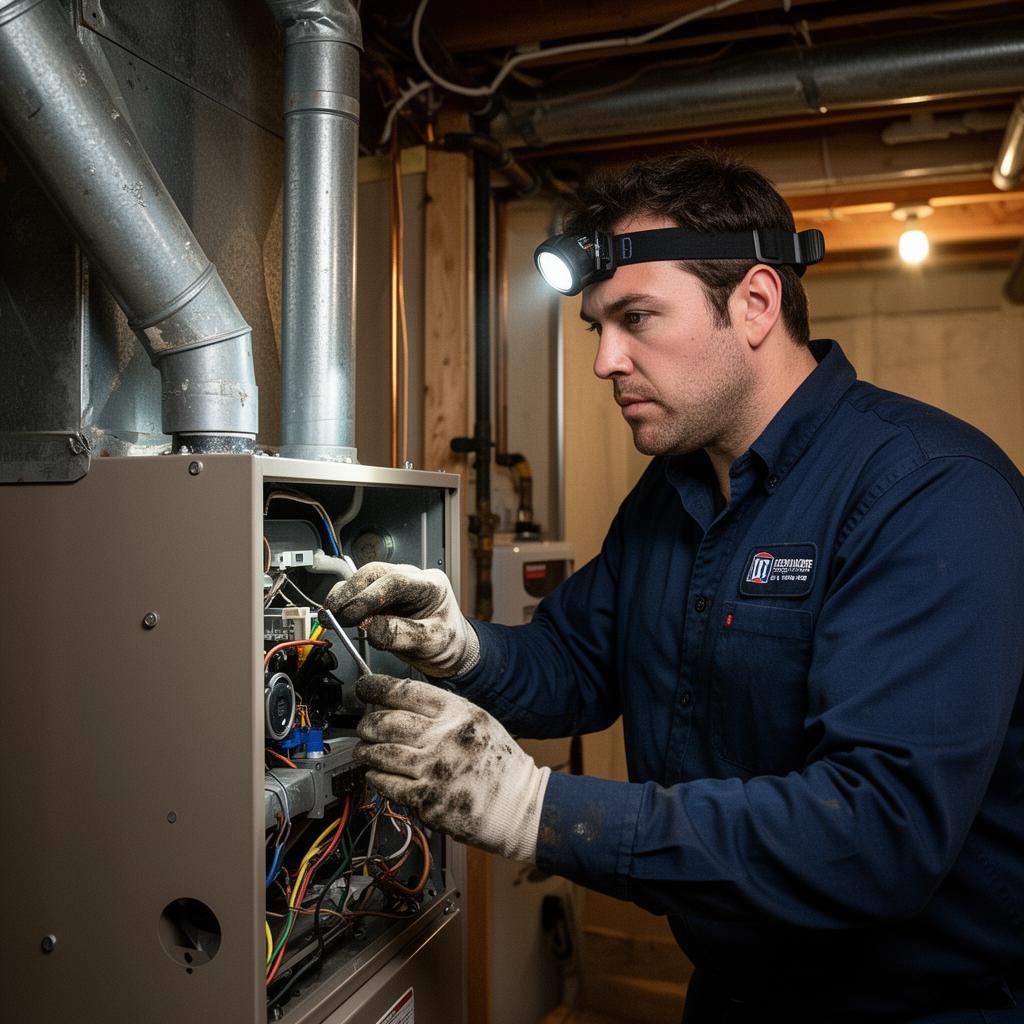
Done right, a $79 tune-up averages $340 in same-visit additional work, and roughly one in six converts to a system replacement within 18 months. That's the math that keeps techs paid in February.
Run a "two birds, one truck roll" promo
Bundle. People who book a furnace tune-up will book a chimney sweep, a humidifier add-on, a duct cleaning, or a water heater flush if you put it in front of them at the same time for a single discounted price. The marginal cost of the second service when you're already on-site is almost nothing - labor is the expensive part of every job, and the truck roll is already sunk.
Sample bundle that has worked across dozens of accounts:
- Furnace tune-up + humidifier check + 16-point safety inspection: $129
- Furnace tune-up + water heater flush: $159
- Whole-home maintenance plan (2 visits/year + 15% off repairs): $19/month
The monthly maintenance plan is the real prize. Every customer on a plan is a guaranteed truck roll twice a year and a guaranteed first call when something breaks.
Lean into Google's slow-season cost advantage
In December, the searcher pool is smaller, but so is the bidder pool. CPCs on furnace and heat pump terms in December are often 30-50% lower than AC terms in July. Most contractors don't notice because they've pulled budget. The ones who shift dollars into the slow season buy clicks at a discount and harvest leads their competitors aren't even bidding on.
Specifically, lean into:
- "Furnace not heating" / "no heat"
- "Heat pump frozen" (huge in mixed-climate metros)
- "Furnace tune-up near me"
- "Indoor air quality" / "humidifier installation"
Mine your own database
You have a CRM full of customers who bought from you in the last 3-5 years. In the slow months, those people are gold. A simple sequence works:
- Postcard or text to anyone who hasn't had service in 18+ months: "Time for a furnace check - $79 through February."
- Phone call from a CSR (not a tech) to anyone who bought a system 8+ years ago: "Just wanted to check in - your system is at the age where a quick inspection makes sense before the cold snap."
- Email to maintenance plan members reminding them their visit is due.
The conversion rate on warm database outreach beats cold ads by 5-10x. The reason most shops don't do it is that it's unglamorous and requires CRM hygiene. Do it anyway.
Don't kill your ads - re-purpose them
If cash flow is genuinely tight, lower spend. Don't pause. Even $30/day keeps your account active, preserves your conversion history, and keeps you visible for the emergency calls that do come in during cold snaps. Pausing entirely and restarting in spring resets the auction learning and costs you more in April than you saved in January.
Also worth considering in the shoulder months:
- Local Services Ads if you're not already running them - they bill per lead, so slow searches = lower bills, no wasted CPC
- Retargeting quote-form abandoners from peak season
- Direct mail to neighborhoods of homes built 1998-2008 (system replacement sweet spot)
The mindset shift
Slow season isn't a problem to survive. It's the season where you build the customer base that makes next summer easier. The contractors who run hardest in October-March are the ones who hit August with a fully loaded board and don't have to take every junk lead just to fill the day.
Want a slow-season game plan built around your numbers? Book a 45-minute call and we'll map it out together.