
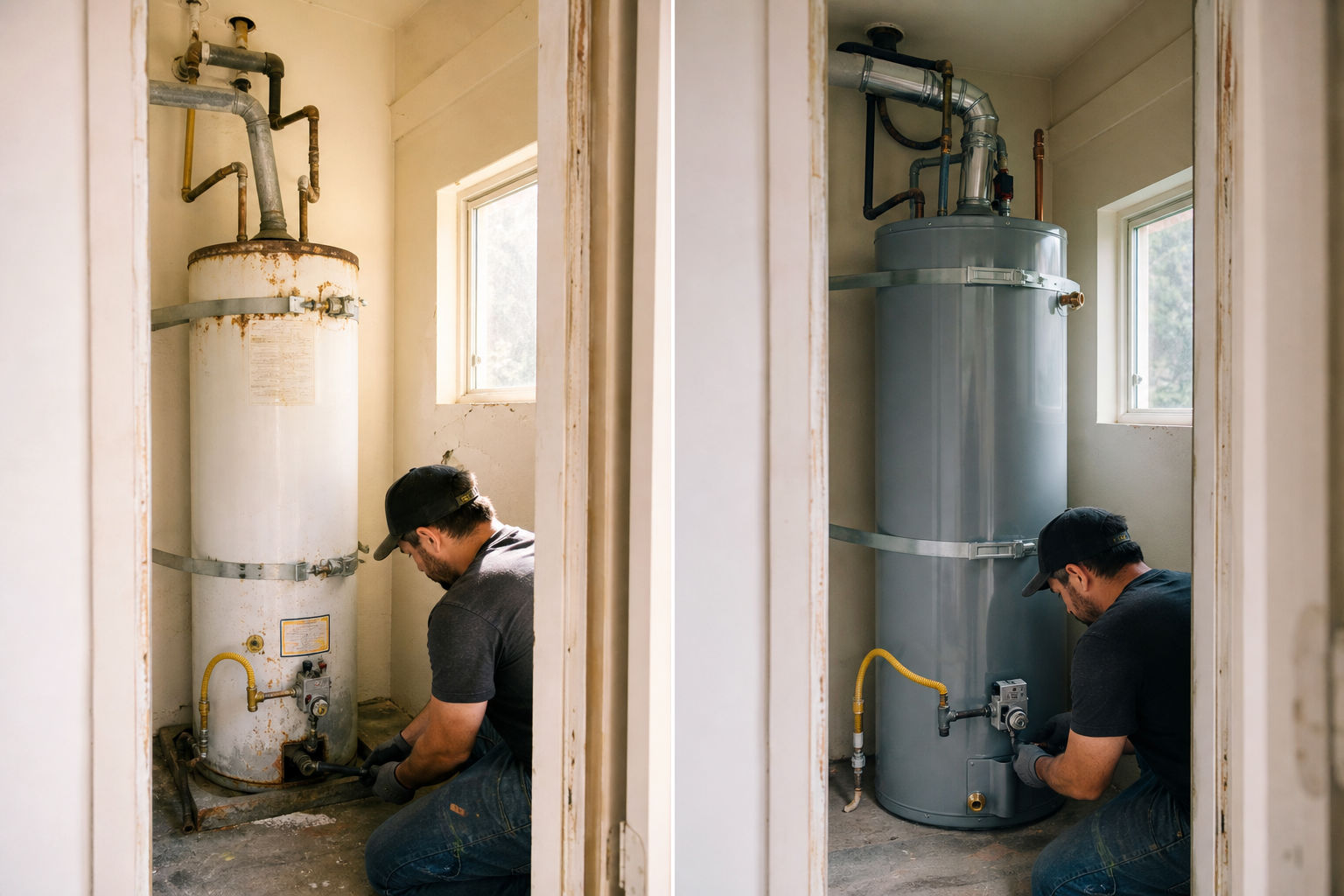
Before & After Photos: Your Most Powerful Sales Tool

Hard Labor Marketing logo
Hard Labor Marketing Team

Marketing for blue-collar and home service businesses

Updated Oct 22, 2026

Published Jun 19, 2026

How before/after photo sets build proof, perform on Google Profile, social, and ads - plus a simple framework every tech can follow.

Before & After Photos: Your Most Powerful Sales Tool
The short answer

Before and after photos prove your shop can solve the exact problem a homeowner is facing. The before shot mirrors the customer's headache, while the after shot shows the relief and value your work provided. Job site photos taken on smartphones cost nothing, outperform generic stock graphics, and can increase conversion rates on local ads by up to 140 percent. Posting real photos consistently to your Google Business Profile, Local Services Ads, and social accounts builds immediate trust and turns online searches into booked calls.

Key takeaways

  • The before photo carries the psychological weight by mirroring the exact problem a homeowner is dealing with right now. When prospects see an old, broken system that looks like theirs, they mentally connect with the problem. The after photo then delivers the relief and demonstrates the value gap your crew filled.
  • Real job site photos consistently outperform polished graphics and stock imagery because homeowners look for authenticity within seconds. Stock photos cost between $20 and $100 per license while offering zero local search value and a trust rating of only 2 out of 10. Raw photos taken by technicians cost nothing and prove you work in the local neighborhood.
  • Technicians should use a simple Triple Threat framework consisting of a context shot, a guts shot, and a victory shot. The context shot captures the full room and problem, while the guts shot gets close to corroded parts or frayed wires to justify the repair. The victory shot matches the original angle to show the completed, clean install.
  • Keep your company truck or a branded technician sleeve in the frame of at least one photo. This acts as a natural watermark so competitors cannot steal your work for their own marketing. It also provides immediate visual proof to prospects that your team completed the project.
  • Distribute your photos across your Google Business Profile, Local Services Ads, and social accounts instead of letting them sit on technician phones. Consistent photo uploads on Google Business Profiles drive higher engagement, while custom ad photos can lift conversion rates by up to 140 percent. Pairing images with real job stories turns simple repairs into compelling sales proof.

How we judge this

  • 1Customer trust rating
  • 2Asset acquisition cost
  • 3Local SEO impact
  • 4Conversion rate lift

Google Business Profile Uploads · Best for boosting local map pack visibility

Posting three to five photo sets every week drives higher engagement on your Google map pack listing. It shows homeowners searching for emergency help that your techs are active in nearby neighborhoods. The photos provide instant proof of your work directly on your digital storefront.

Local Services Ads Custom Photos · Best for improving click-through rates on paid ads

Replacing generic imagery in your Google Guaranteed ads with authentic local job photos makes your listing stand out. Real photos tied to local areas can increase conversion rates by up to 140 percent compared to standard stock ads. Customers see real equipment changes rather than corporate stock models.

Social Media Story Posts · Best for explaining the story behind emergency repairs

Pair your job site photos with a brief narrative explaining the customer problem and how your team resolved it quickly. Telling the story of an after-hours breakdown educates buyers on why components fail and how your crew delivers fast relief. This approach turns standard photos into entertaining and educational sales tools.

Stock Photography · Best for agencies relying on generic promotional graphics

Stock photos cost between $20 and $100 per license and generate a low trust rating of 2 out of 10. They lack local search metadata because thousands of other websites use the exact same files. Homeowners scroll right past them because polished, fake graphics feel out of touch.

StrategyCustomer Trust RatingAsset Acquisition CostLocal SEO ImpactConversion Rate Lift
Google Business Profile Uploads10 out of 10 trust$0 technician photosHigh local metadata valueHigher engagement
Local Services Ads Custom Photos10 out of 10 trust$0 technician photosHigh ad prominenceUp to 140% higher
Social Media Story Posts10 out of 10 trust$0 technician photosIndirect social reachEngages prospective buyers
Stock Photography2 out of 10 trust$20 to $100 per licenseZero local valueLow conversion rates

Stop overthinking your marketing. You don't need a $10,000 graphics package or a "visionary" brand consultant to sell more jobs. You need a smartphone and a tech who isn't too lazy to snap two photos.

In the trades, trust is the only currency that matters. A homeowner isn't just buying a water heater; they are buying the peace of mind that their basement won't be a swimming pool by Tuesday. Before and after photos are the ultimate receipt. They prove you were there, you saw the mess, and you fixed it.

If you aren't documenting your work, you’re leaving thousands of dollars on the table every month. You’re forcing customers to take your word for it, and in 2024, words are cheap.

The Psychological Hook: Mirroring the Nightmare

Most contractors make the mistake of only showing the "after" photo. They want everything to look pristine. But the "before" shot is actually the one that does the heavy lifting.

When a homeowner sees a rusted-out, leaking HVAC unit that looks exactly like the one in their attic, they mentally "claim" that problem. They see their own headache mirrored on your screen. The "after" photo provides the dopamine hit-the relief.

Without the "before" photo, the "after" is just a picture of a generic metal box. It has no context. It has no soul. You need the contrast to show the value gap you just filled.
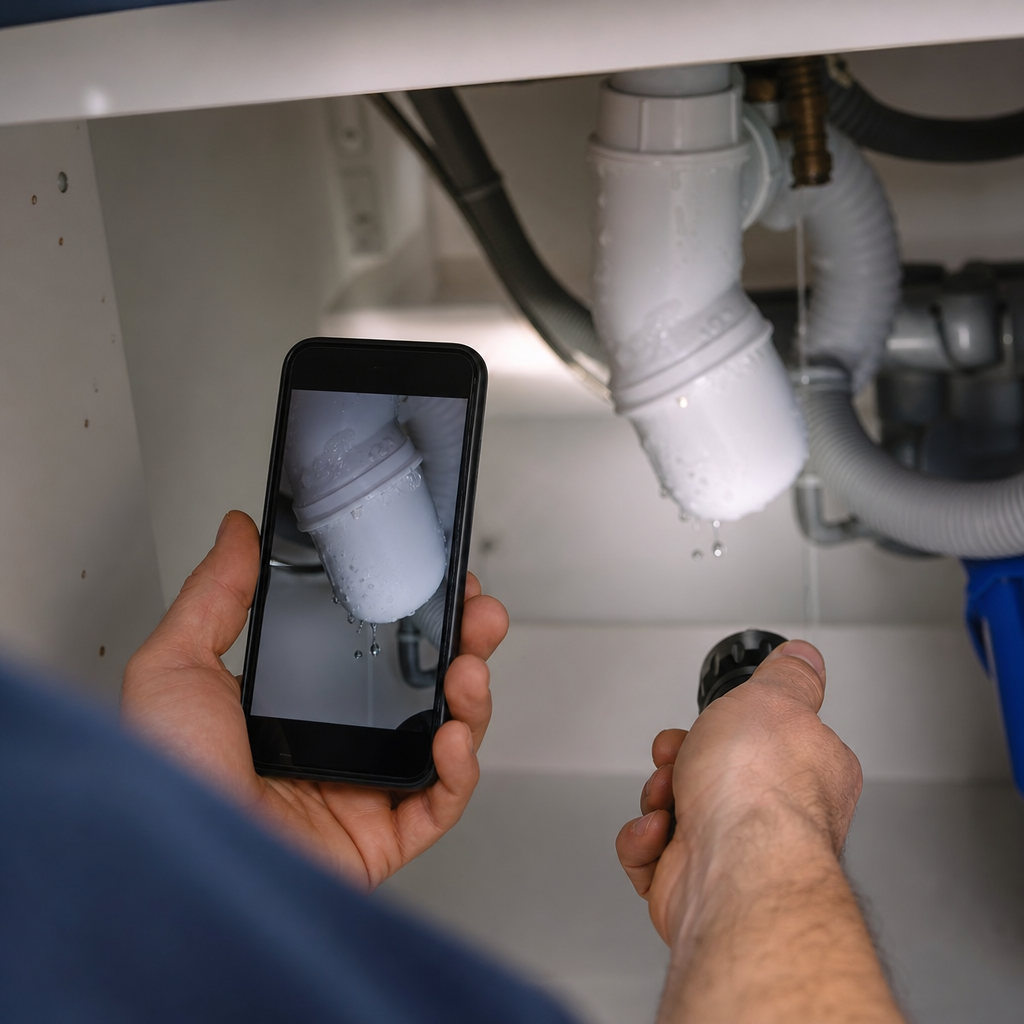
A plumber's hand holding a smartphone taking a before photo of a leaky pipe under a sink,

Why Raw Photos Beat High-End Graphics

We’ve talked before about how Homeowners Judge Your Company In 3 Seconds Flat. In those three seconds, the human brain is looking for "real."

Polished, corporate stock photos scream "we're expensive and out of touch." Real photos from a job site in your actual service area scream "we’re in your neighborhood right now doing the work."

If you use a stock photo of a smiling guy in a clean shirt holding a wrench he’s clearly never used, you’ve fallen into The Stock Photo Trap. You’ve traded your credibility for a pretty picture.

| Feature | Job Site Photos (Raw) | Stock Photos (Fake) | | :--- | :--- | :--- | | Trust Factor | 10/10 - It's real proof. | 2/10 - Looks like an ad. | | Local SEO | High - Metadata shows your city. | Zero - Used by 1,000 other sites. | | Cost | $0 - Done by your techs. | $20 - $100 per license. | | Conversion | Up to 140% higher on LSA/GBP. | Low - Users scroll past them. |

The "Triple Threat" Framework for Techs

Your techs aren't photographers. They are mechanics, installers, and cleaners. If you give them a complicated list of "content requirements," they’ll never do it. Keep it simple. Tell them to follow the Triple Threat:

  1. The Context Shot: Stand back and get the whole mess. Show the room, the clutter, and the old unit.
  2. The "Guts" Shot: Get close. Show the cracked heat exchanger, the corroded pipe, or the frayed wiring. This justifies the "why" of the repair.
  3. The Victory Shot: The finished product. Same angle as shot #1. Clean, symmetrical, and shiny.

Pro-Tip: Make sure your company truck or a tech’s branded sleeve is visible in at least one shot. It "watermarks" the photo so competitors can't steal it, and it confirms it’s your work.
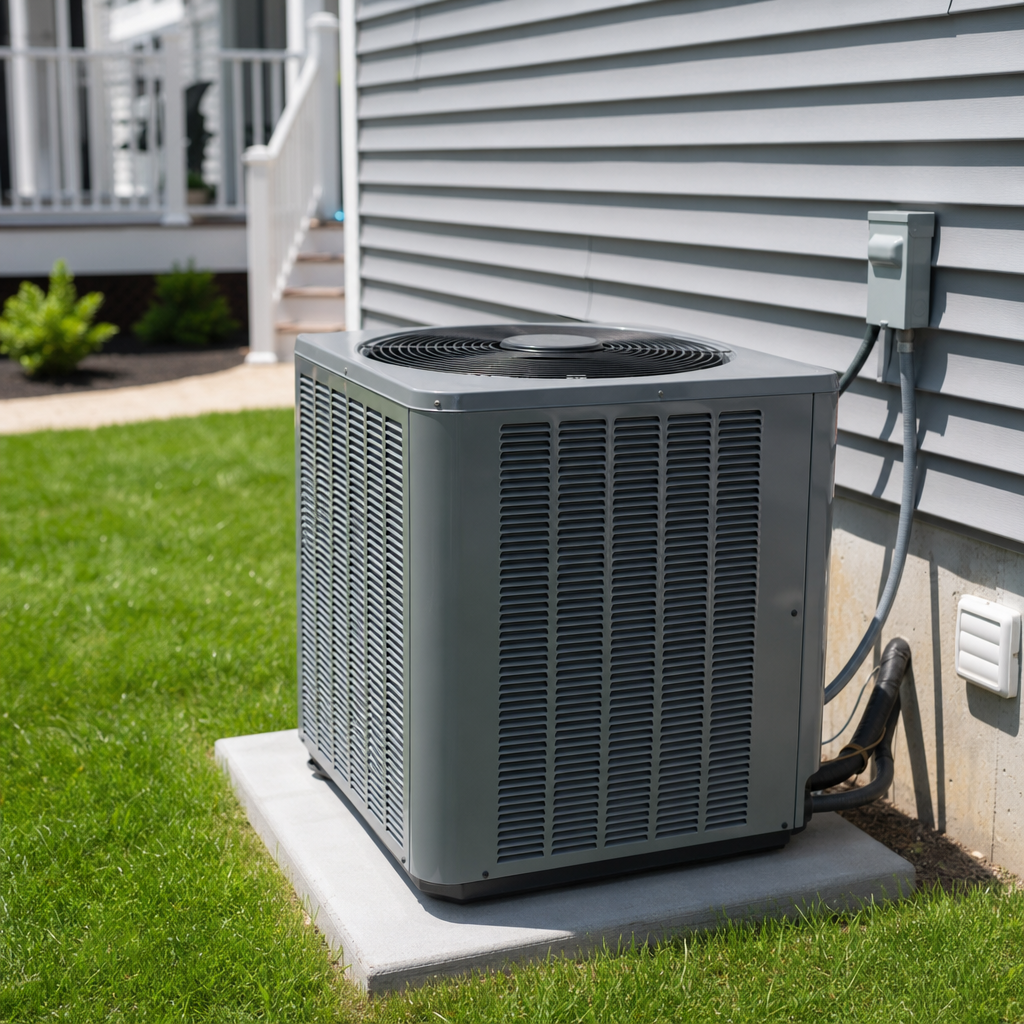
A close-up of a clean new HVAC condenser unit installed beside a suburban home, green gras

Converting Pixels into Profit

Photos shouldn't just sit on a tech's phone. To get a return on that 30 seconds of effort, you need to distribute them across your "digital storefront."

Google Business Profile (GBP)

This is the most important place for your photos. When someone searches "Plumber near me," Google shows a map pack. Profiles with frequent, high-quality user-uploaded photos get higher engagement. Aim for 3-5 new sets per week.

Local Services Ads (LSA)

If you’re running LSAs (the "Google Guaranteed" ads), custom photos are your secret weapon. Most of your competitors are using the same generic images. When your ad shows a real "before and after" from a local street name, your click-through rate (CTR) will skyrocket.

Social Media (The "Edu-tainment" Factor)

Don't just post the photo and say "Another job done." Tell the story.

  • “Mrs. Jones called us at 2 AM because this 20-year-old tank finally gave up. We had her back in hot water by noon.”
  • That story, paired with the proof, is why 89% Of Buyers Say Video Convinced Them-and the same logic applies to a compelling photo set.

The "Cleaner Than We Found It" Rule

The "after" photo is also a quality control tool for you, the owner. If a tech takes an "after" photo and there’s copper clippings or PVC primer stains on the floor, they aren't done.

The photo is the final inspection. If they are proud enough to photograph it, they likely did the job right. If they are "forgetting" to take photos, they might be cutting corners.

Think of it like this: The photo is the "ribbon-cutting ceremony" for every job. It marks the transition from a problem to a solution.

Stop Collecting, Start Implementing

You probably have 500 photos sitting in a "Project" folder or scattered across five different iPhones. They are currently worth $0.

Assign one person in your office-or your marketing agency-to grab those photos every Friday. Put them on Google. Put them on Facebook. Put them on your gallery page.

Here is your 48-hour challenge:

  1. Tell your techs they get a $10 bounty for every "before and after" set they upload to your group chat or CRM that includes a truck/logo in the frame.
  2. Post the best one to your Google Business Profile today.
  3. Watch your "Request a Quote" buttons actually get clicked.

Stop selling services and start selling results. The camera doesn't lie, and in an industry full of "cowboys," the man with the most proof wins every single time.

Want us to handle the heavy lifting? If you're tired of chasing techs for photos and want a system that turns your daily work into a lead-generating machine, reach out to Hard Labor Marketing. We’ll build your "Proof Engine" while you focus on the wrench.

Case study

Phaze Electric LLC

A custom 18 page site, original job site media, and 363.6% more LinkedIn views

FAQ

Frequently asked questions

Why is the before photo more important than the after photo?

The before photo captures the homeowner's current pain point and forces them to confront a problem that looks like their own. Without the before shot, the after photo is just an unattached picture of a metal box with no context. Showing both highlights the value gap your team resolved.

What is the Triple Threat framework for technician photos?

The Triple Threat framework requires technicians to take three simple photos on every job site. First is a wide context shot of the entire mess, second is a close shot of the failed part, and third is the completed victory shot from the same initial angle. This gives your marketing team complete proof without burdening the technician.

How many photo sets should a shop post each week?

Shops should aim to post three to five new photo sets per week to their Google Business Profile. Regular uploads keep your profile active and signal to local searchers that your crew is working in the area. Consistent updates lead to higher engagement across the local map pack.

How can shop owners prevent competitors from stealing their job photos?

Make sure your company work truck or a technician wearing a branded company sleeve appears in the frame of at least one shot. This acts as a physical watermark that confirms your company did the work. It stops dishonest competitors from taking credit for your clean installations.

How do before and after photos help with shop quality control?

The final photo serves as an inspection checkpoint for the job before the technician leaves the site. If the photo reveals debris like copper clippings or primer stains on the floor, the tech knows the job is incomplete. Technicians who take pride in photographing their work are far less likely to cut corners.

How can I motivate technicians to take photos consistently?

You can run a 48 hour challenge offering a $10 bounty for every before and after set uploaded to your CRM or group chat. Ensure the rule requires a company truck or logo in the frame to qualify for the payout. Keeping the photography process down to three simple shots prevents pushback from technicians.