
Reviews are the most undervalued lever in home services marketing. They cost essentially nothing to acquire, they directly drive Google Maps rankings, they lift every ad's click-through rate, and they crush competitor objections before they ever come up on a sales call.
And yet most contractors have 40-90 lifetime reviews. Their growing competitor has 380, with three new ones from this week. Guess who wins the next 100 customers.
Here's the system.
Why reviews matter more than ever in 2026
Three things changed in the last 18 months:
- AI Overviews in Google search now summarize "best plumber near me" results using review content as the primary signal. If your reviews don't mention what you actually do, you don't show up in the summary.
- Map pack ranking weight on review volume and recency has measurably increased. A business with 40 reviews from 2019 ranks below a business with 200 reviews and 3 new ones this month, even if proximity is similar.
- Buyer behavior shifted. Younger homeowners (Millennials and Gen Z, now the dominant home-buying cohort) will not call a business under 4.5 stars or under 100 reviews. Period.
You don't have a marketing problem if you don't have reviews. You have a "you are invisible" problem.
The system that actually works
There's no clever growth hack here. Just a discipline most shops won't run.
Step 1: Make asking part of the job, not an afterthought
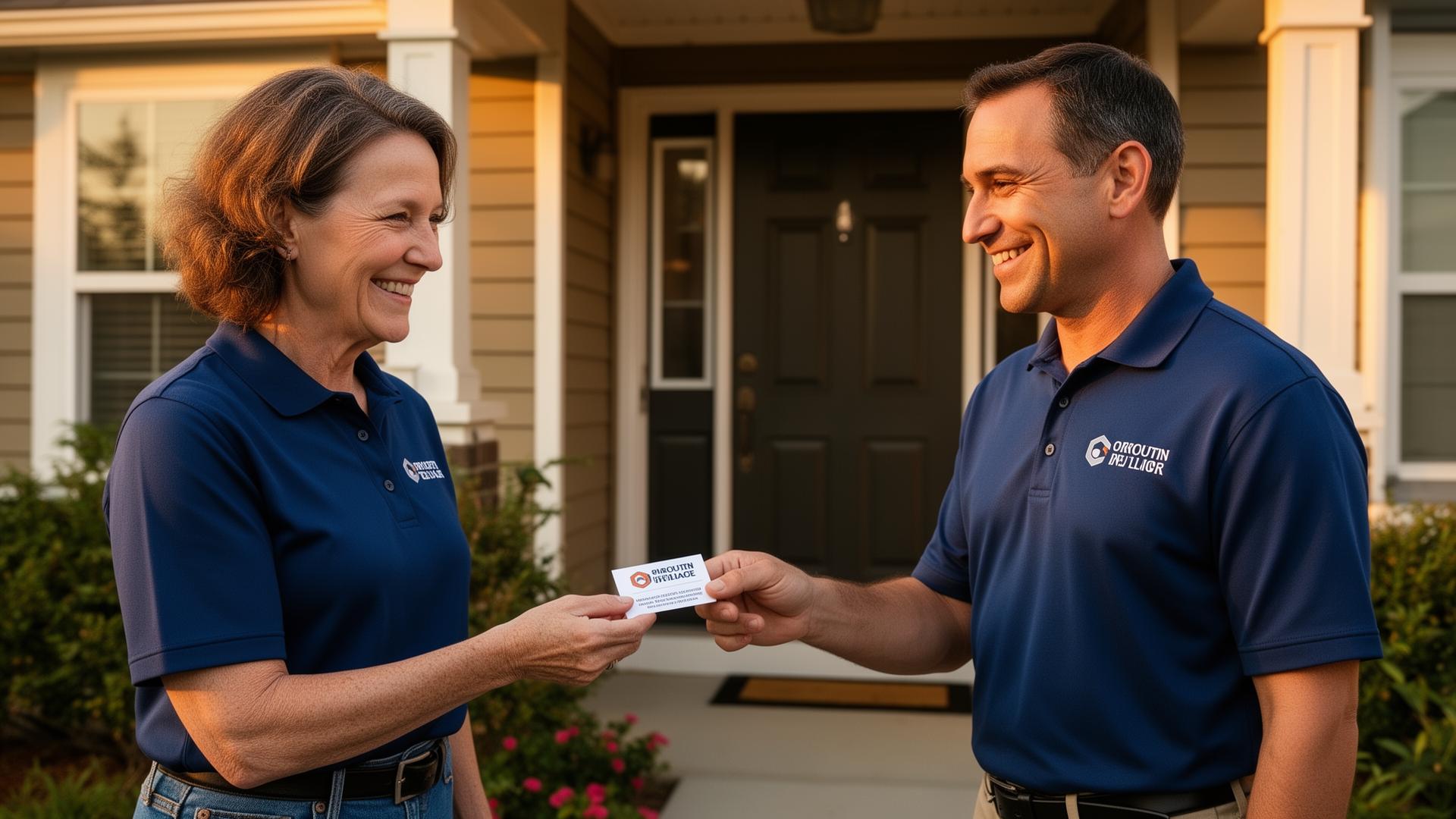
The single highest-leverage change is having the tech ask in person, on the doorstep, before they leave the property. Not "we'll send you an email later." Not "if you have a minute, would you mind…" An actual script:
"Hey [Customer Name], glad we got that sorted today. Quick favor - Google reviews are how we get found by other neighbors who need help. If I did a good job today, would you be willing to leave a quick review? I can send you the link right now while I'm here."
In-person asks convert at 40-60%. Email asks convert at 4-8%. The same customer, asked differently, is 10x more likely to leave a review when there's a human in front of them.
Step 2: Make leaving one frictionless
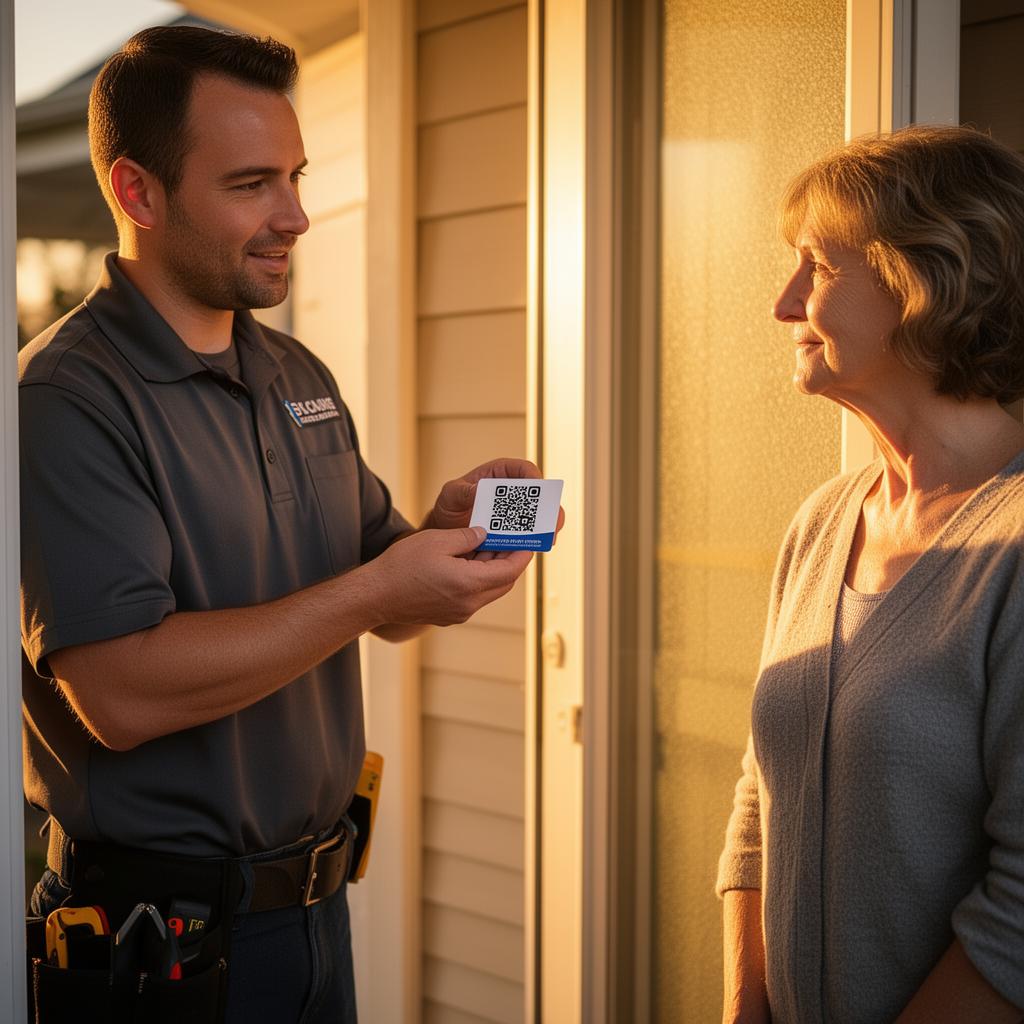
Send a text - not an email - within 5 minutes of the tech leaving, with a direct link to your Google review form (not your Google Business Profile homepage, which then makes them hunt for the "Write a review" button). Tools like NiceJob, Birdeye, or even a simple Twilio integration with your dispatch system handle this. If you're really starting from scratch, a $5/month text service and a CSR doing it manually works fine for the first six months.
Use a Google review short link like g.page/r/yourcode/review so the customer lands directly on the review screen, already logged in, one tap from typing.
Step 3: Give them a reason to actually do it
The best review prompts give the customer something to say, not just a star rating to leave. After a good job, your text might read:
"Hey [Name], it's [Tech] from Acme HVAC. Thanks for trusting us with your AC today! If you've got 30 seconds, would you mind sharing what your experience was like? [link]"
When they reply, you get a story-driven review - "Mike showed up on time, explained everything, fixed it in 20 minutes" - which ranks better in search and converts better with prospects than "great service."

Step 4: Respond to every review (yes, every one)
Reply to all of them within 48 hours. Two reasons:
- Google measures response rate as a ranking signal in the map pack
- Prospects reading reviews look at how you respond more than what the review says
Good response pattern: thank them by name, mention the specific service ("glad we got that capacitor swapped quickly"), invite them back. Keep it under three sentences. For negative reviews, never argue. "Sorry we missed the mark, [Name] - I'd love to make it right. Please reach me directly at [phone/email]." Then take it offline.
Step 5: Make it a measured KPI
What gets measured gets done. Track these weekly:
- Reviews requested (by tech)
- Reviews received (by tech)
- Star average rolling 30 days
- Response time on new reviews
Pay a small spiff per 5-star review. $5-10 a review adds up to a couple thousand dollars a year per tech and pays for itself many times over. The cost of that spiff is dwarfed by the revenue lift from being the top-rated shop in your service area.
What NOT to do
- Don't gate reviews ("only ask happy customers"). Google now detects review gating and can suppress your profile. Ask everyone.
- Don't buy reviews. Period. They get filtered or your profile gets suspended.
- Don't ask for "5 stars" specifically in your prompt. Ask for honest feedback. Yelp and Google both penalize accounts that nudge for a specific star count.
- Don't dump 50 reviews in a week. Steady drip beats a spike - sudden bursts look fake to Google's algorithms.
What "good" looks like
A healthy home services business in a competitive metro should be targeting:
- 10-25 new reviews per month (1-3 per active tech per week)
- 4.8+ star rolling average
- 100% response rate within 48 hours
- Review volume that compounds - 200 → 300 → 450 → 700 over 24 months
Once you cross 250 reviews with a 4.8 average, you'll notice your map pack rankings stabilize and your cost per lead drops measurably. Reviews aren't a marketing tactic - they're the moat.
For more on map pack ranking factors, see why HVAC marketing isn't working. For the math on what each review is actually worth to your business, check our breakdown on cost per lead for HVAC and plumbing.
Want us to set up the whole review system for your shop end-to-end? Book a 45-minute call - we'll show you what it looks like running.