
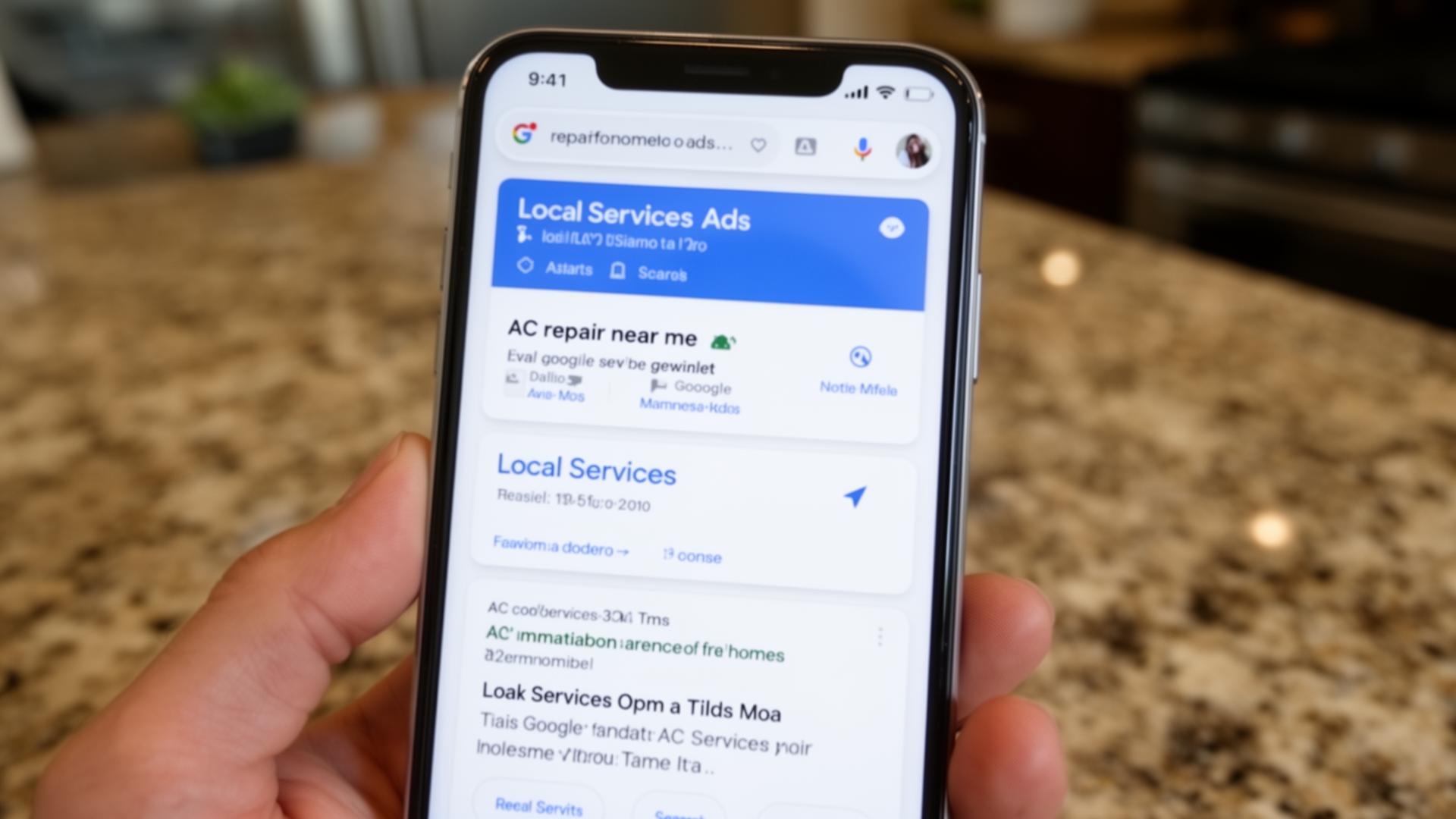
If you're an HVAC or plumbing contractor running paid Google traffic, you've got two main vehicles: Local Services Ads (LSAs, those pay-per-lead boxes at the very top with the green "Google Guaranteed" badge) and Google Ads (the classic pay-per-click search ads underneath).
Both work. Both fail. The right answer is usually "both, in the right proportion," but the proportion matters more than people think. Here's the actual breakdown.
How they're different (in plain English)
Google Ads - you pay every time someone clicks your ad. You bid on keywords like "ac repair austin." Your job is to write a good ad, send the click to a fast-loading page that doesn't suck, and convert it to a phone call or form fill. You pay whether or not the click becomes a job.
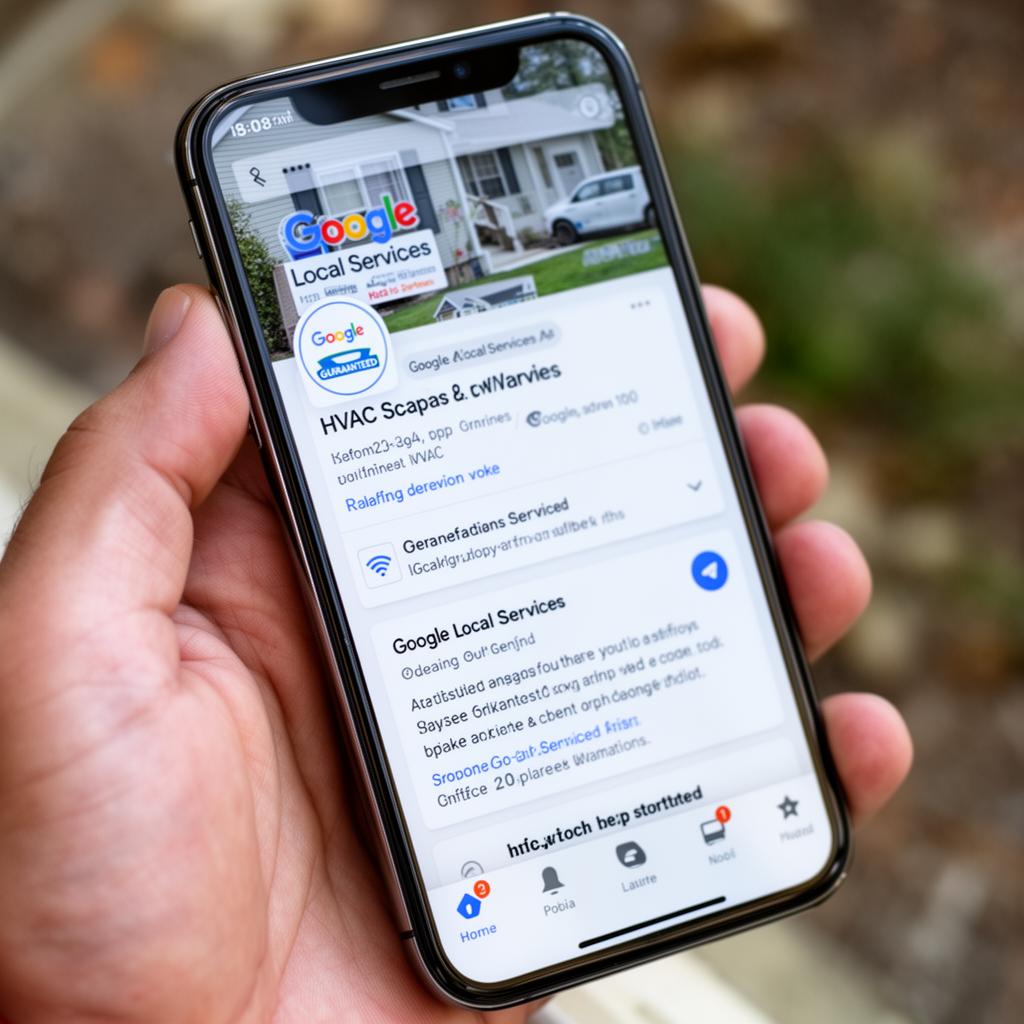
Local Services Ads - you pay per lead (phone call or message), not per click. You don't pick keywords; Google figures out which searches are relevant based on your services and service area. You need to pass a background check and license verification to earn the "Google Guaranteed" badge.
The case for LSAs
- Top-of-page placement above every other ad and every map result. On mobile (where 70%+ of "near me" searches happen), LSAs eat the entire first screen.
- Pay per lead, not per click. Tire-kickers cost nothing.
- Trust badge. The Google Guaranteed checkmark moves conversion rates a measurable amount with older homeowners especially.
- Disputable bad leads. If a lead is clearly out of service area, wrong service, or a spam call, you can dispute the charge and Google usually refunds it.
- Simple to manage. No keyword bidding, no Quality Score, no ad copy A/B tests.
The case against LSAs
- You can't really optimize. Google decides which searches you show on. If you're a hydronic heating specialist, you might pay for generic "heating repair" calls that aren't your sweet spot.
- Lead costs are climbing fast - in many metros, $60-110 per lead is the new normal for HVAC, up from $35-50 two years ago.
- Some metros have 6-12 month wait times to get verified.
- Caller experience can be rough. People shop multiple LSA listings simultaneously; expect to be one of three calls they're making in a row.
The case for Google Ads
- Full keyword control. You can bid on the searches that match your most profitable jobs ("ductless mini split install," "tankless water heater installation," "heat pump installation"), not generic repair calls.
- Landing page control. You send traffic to a page you designed - with the offers, photos, and forms you want - instead of a Google-controlled phone number listing.
- First-party data. You learn what your customer searched, what page they converted on, and you can retarget them later. With LSAs you get a phone number and that's it.
- Better for high-ticket services. Replacements, installs, and commercial work benefit from landing pages that explain options, financing, and warranties - which LSAs can't do.
The case against Google Ads
- Steep learning curve. Run badly, you'll lose money for months before realizing it.
- Click costs are aggressive - $25-80 per click on competitive HVAC terms is common.
- You need a real landing page, not your homepage, or your conversion rate will be brutal.
- Quality Score matters. Google rewards good landing pages and ad relevance with lower CPCs; punish you with higher ones for sloppy setups.
The numbers we typically see
For a healthy mid-sized HVAC company in a top-50 metro:
| Channel | Cost per lead | Cost per booked job | Best for | | --- | --- | --- | --- | | LSAs | $55-95 | $110-180 | Service calls, brand-agnostic repair | | Google Ads (Search) | $80-160 | $130-260 | Installs, replacements, specialty work | | Google Ads (Performance Max) | $40-90 | $120-220 | Branded search defense + remarketing |
Numbers vary wildly by city, season, and how well the account is managed. These are ballpark only.
So which should you run?
In 2026, the answer for most established HVAC and plumbing companies is both - but with intent.
- Use LSAs to capture the high-intent "I need someone now" calls. Treat it as a service-call faucet.
- Use Google Ads to capture the higher-margin installation and replacement searches with proper landing pages, financing offers, and brand-specific creative.
- Use Performance Max to defend your branded searches (so competitors don't poach customers Googling your name) and to retarget previous site visitors.
Newer or smaller shops without good landing pages should usually start with LSAs only, get the operational stuff right (call handling, dispatch, review collection - see our guide on getting more Google reviews), and layer Google Ads in once they're set up to convert the traffic.
Want help figuring out the right channel mix for your business? That's literally our day job - book a free 45-minute strategy call.