
You’re spending thousands of dollars every month on Google Local Services Ads (LSA) and Facebook lead forms. You see the clicks. You see the "impressions." But the phone isn't ringing as often as the dashboard says it should.
Here is the cold, hard truth: A click is not a lead.
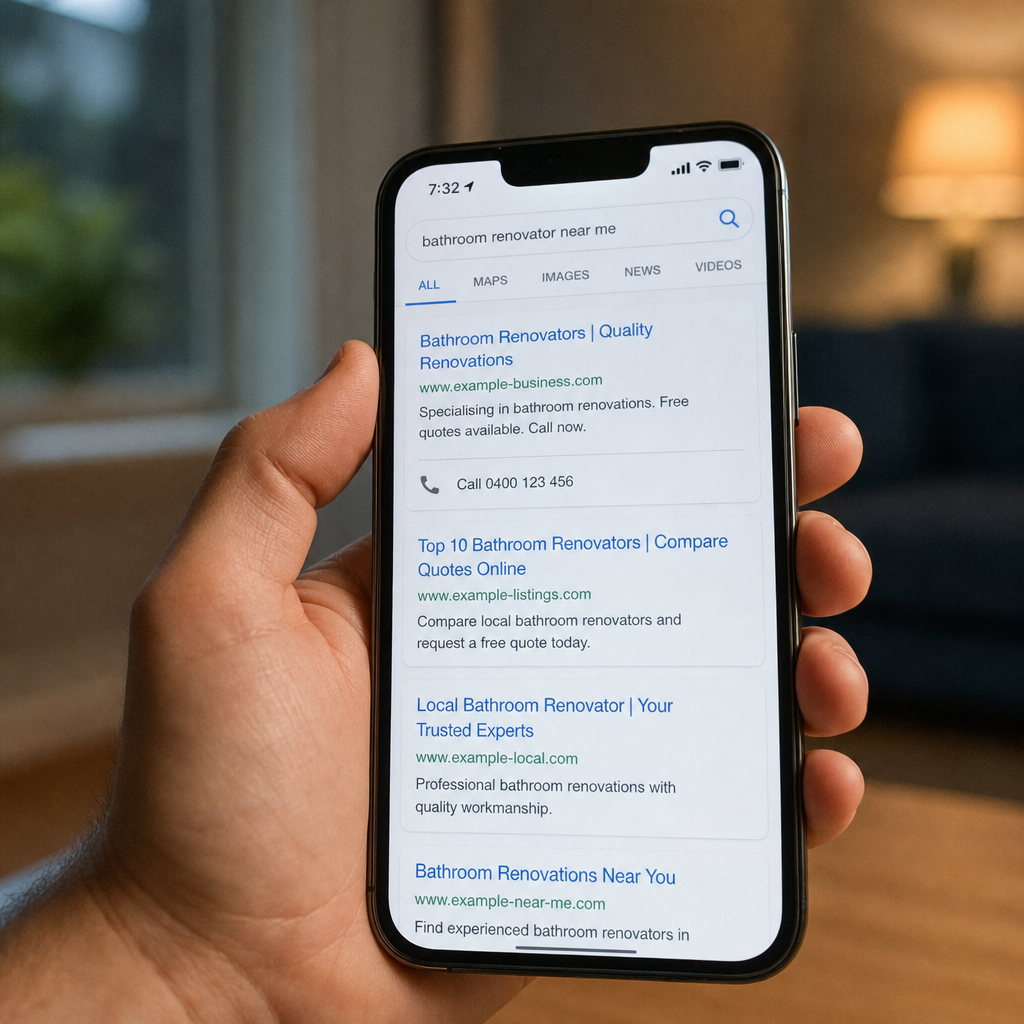
In the trades, homeowners are skeptical by nature. They’ve been burned by "chuck-in-a-truck" contractors who show up late and leave a mess. When they see your ad, they don't just hit the "call" button. They do their homework. They click your ad, then they open a new tab and Google your business name.
They are looking for a reason to disqualify you. They are hunting for proof that you are a legitimate operation, not a fly-by-night outfit using a stock photo of a guy in a pristine white hardhat he’s clearly never worn. If what they find doesn't match the professional image of your ad, you just paid for a click that went straight to your competitor.
The "Verification Gap" killing your ROI
There is a massive gap between the moment a customer sees your ad and the moment they give you their credit card number. We call this the Verification Gap.
Think of your ad like a flashy billboard on the highway. It gets attention. But your online presence-your website, your Google Business Profile, and your social media-is the actual shop. If the billboard looks like a Fortune 500 company but the shop looks like an abandoned warehouse, the customer is going to keep driving.
When a homeowner Googles you after an ad, they are checking three specific things:
- Do you actually exist in their town?
- Does your team look like people they want in their house?
- Do you do the specific work they need right now?
If they find a "Coming Soon" website or a Facebook page that hasn't been updated since 2021, they’ll bounce. In fact, homeowners judge your company in 3 seconds flat based entirely on the visuals they see.
The Comparison: Professional Assets vs. "Good Enough"
Most owners think "good enough" is fine because they’re busy. They use a photo of a clean van they took three years ago and call it a day. But look at how a homeowner weighs your business against the guy down the street:
| Feature | The "Average" Contractor | The High-Ticket Pro | | :--- | :--- | :--- | | Google Business Profile | 3-year-old street view and a blurry logo. | Custom photos of the owner, the office, and the fleet. | | Website Visuals | Generic stock photos of smiling models. | High-res photos of actual techs on local job sites. | | Social Media | Random "Happy Labor Day" graphics. | Video walk-throughs of finished installs. | | First Impression | "Looks like a small side-hustle." | "This is a legitimate local institution." | | Conversion Rate | 2-5% from ad traffic. | 12-20% from ad traffic. |
Why Stock Photos are the Kiss of Death
If your website features a guy who looks like a Swedish underwear model holding a wrench, you've already lost. Homeowners aren't stupid. They know that guy doesn't work for you.
When you use "canned" imagery, you are telling the customer that you don't have enough pride in your own work to show it off. This is the stock photo trap, and it kills credibility instantly.
A homeowner wants to see the specific truck that will be in their driveway. They want to see the face of the tech who will be talking to their spouse. Authentic photography of your actual team builds a bridge of trust that no "perfect" stock photo can match.
Video: The Ultimate Trust Accelerator
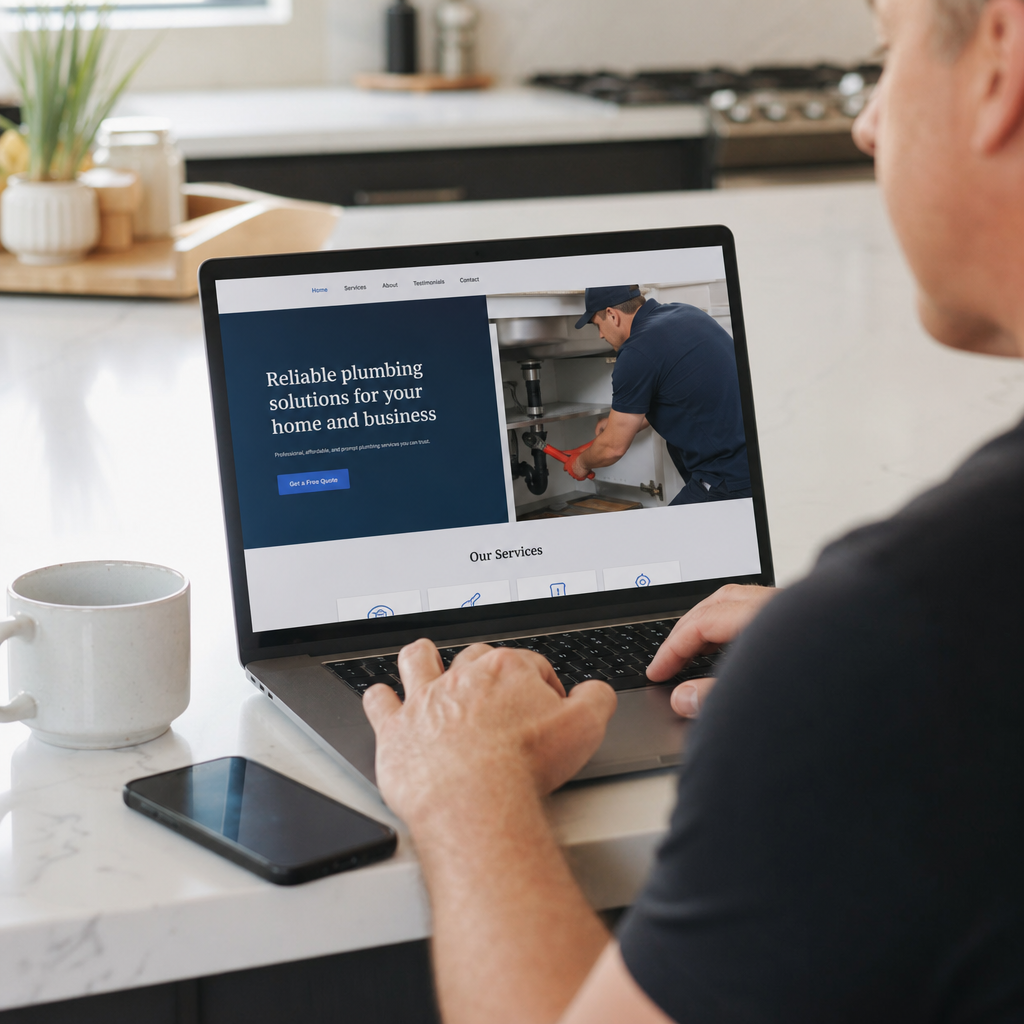
The highest-performing HVAC and plumbing companies aren’t just using photos anymore. They are using video to close the sale before the phone even rings.
Why? Radical transparency. When you show a 30-second clip of your lead installer explaining how they protect the customer's hardwood floors with drop cloths, you’ve answered a fear the customer hadn't even voiced yet.
Statistics back this up: why 89% of buyers say video convinced them to make a purchase is simple-it’s the closest thing to an in-person meeting. It removes the mystery. It proves you have the tools, the talent, and the professional standards you claim to have in your ads.
The Cost of a "Ghost" Presence
Let's talk numbers. If you are paying $50 per lead on LSA, but your "background check" (the Google search after the ad) is failing because of poor visuals, you are flushing money.
Let’s say 100 people click your ad.
- Scenario A (Poor Visuals): 2 people call. Your Cost Per Lead is $2,500.
- Scenario B (Pro Visuals): 15 people call because they liked what they saw when they Googled you. Your Cost Per Lead is $333.
Professional photography and video aren't "creative" expenses. They are direct performance multipliers for your ad spend. They make every dollar you give to Google work five times harder.
What You Need to Do Today
Stop looking at your marketing as just the ads. The ads are just the invitation. Your online "vibe" is the party. If the party looks lame, nobody is coming inside.
Start by doing this: Open an Incognito window on your browser. Type in your company name. Look at the first five things that pop up.
- Is your logo consistent?
- Are the photos of your actual team and trucks?
- Is there a video of you, the owner, explaining why you started this business?
If the answer is no, you are leaving six figures on the table every year. You don't need a "rebrand"-you need a reality check. Show the homeowner who you really are, and they’ll stop clicking and start calling.
Stop wasting your ad budget on a brand that doesn't convert. If you're ready to fix your visual footprint and start closing the high-ticket leads you’re currently losing, Hard Labor Marketing is ready to get to work.