
Let’s be honest: most HVAC and plumbing websites look like they were built using the same five "handshake" photos from a 2012 stock image library. You know the ones. The guy with the blindingly white teeth, the perfectly pressed uniform, and a wrench he has clearly never used in his life.
Homeowners aren't stupid. They can smell a fake from a mile away. When you use stock photos, you aren't just being lazy; you’re telling the customer that you’re hiding something. You’re telling them that your real team, your real trucks, and your real work aren't good enough to show off.
Investing in real photography and video isn't "frosting" or some high-level corporate luxury. It’s a core engine for Local SEO, Ad Performance, and Lead Conversion. If you want to stop competing on price and start winning on trust, you need to pull the curtain back on your actual operation.
Google Rewards Reality (The SEO Play)
Google’s algorithm is smarter than your average dispatcher. It doesn't just look at keywords; it looks at user engagement. When a homeowner lands on a site filled with stock photos, they bounce. When they see a video of a real tech explaining an AC install, they stay.
Dwell time - how long someone stays on your site - is a massive ranking signal. More importantly, Google Business Profile (GBP) thrives on unique content. If you upload a real photo of a finished furnace install in a local zip code, Google associates your business with that physical location and that specific service.
Stock photos have zero metadata. Real photos taken on a smartphone have GPS coordinates baked in. Which one do you think Google trusts more when someone searches "plumber near me"?
The "Stock Photo Tax" on Your Ad Spend
If you’re running Facebook or Instagram ads with stock images, you’re paying a "lazy tax." People scroll past ads that look like ads. They stop for things that look like content.
We’ve seen it across dozens of accounts: an ad featuring a real photo of a technician standing in front of a wrapped truck will outperform a polished stock graphic by 300% to 500% in click-through rate (CTR).
When your CTR goes up, your Cost Per Click (CPC) usually goes down. By showing your real faces, you’re literally making your marketing budget go further. It’s the difference between a $15 lead and a $65 lead.
| Feature | Stock Photos | Real Team Content | | :--- | :--- | :--- | | Trust Factor | Low (Looks like a scam/generic) | High (Authentic & Local) | | SEO Impact | Zero | High (Metadata & Citations) | | Ad Performance | Expensive (Low Engagement) | Efficient (High CTR) | | Brand Differentiation | Non-existent | Dominant |
Why Homeowners Buy (The 5-Second Rule)
Building service-based trust is like dating. If your profile picture is a drawing of a person, no one is going to show up for the date. You are asking people to let strangers into their homes, often when they are stressed, sweaty, or dealing with a flooded basement.
They need to see who is coming. Showing your actual techs-complete with the tattoos, the work boots, and the company polo-removes the "vulnerability barrier." Why homeowners pick their contractor in 5 seconds comes down to a gut feeling. Does this look like a guy I can trust around my kids and my dog?

Analogies That Stick: The Menu vs. The Meal
Imagine walking into a steakhouse where the menu has photos of burgers from a McDonald's commercial. You’d walk out. You want to see the ribeye that came out of that kitchen.
Using stock photos is like a restaurant using pictures of food they didn't cook. It’s a bait-and-switch. Real photos of your messy, gritty, "hard labor" job sites aren't ugly-they’re evidence. They are the proof of work that justifies your premium price tag.
Video: The Ultimate Sales Closer
If a picture is worth a thousand words, a 30-second video of an owner talking about their "No-Hassle Guarantee" is worth a thousand leads.
You don't need a Hollywood budget. A modern iPhone and a $30 lavalier microphone are enough to create:
- Bio Videos: Introduce your lead techs so the customer knows who’s ringing the doorbell.
- FAQ Videos: Answer the top 5 questions you get about heat pumps or tankless water heaters.
- The "Why Us" Video: Explain your brand voice and why you started this company.
When a customer watches a video of you, they’ve already met you. By the time you show up to give the estimate, the "selling" is already 70% done.
The High Cost of Looking "Professional"
Owners often tell me they use stock photos because they want to look "professional." That’s a trap. In the trades, "professional" doesn't mean "corporate." It means reliable, skilled, and local.
Your truck wrap is a great start, but your truck wrap isn't a brand. Your brand is the reputation you build through every touchpoint. If your website looks like a generic template, your brand feels like a generic commodity. Commodities get shopped on price. Real businesses get chosen on value.
How to Get Started Without a Film Crew
You don't need to spend $10k on a production company tomorrow. Start with this:
- Stop the Stock: Audit your website. If you see that guy with the fake smile and the pristine hardhat, delete him.
- The "One Photo Per Job" Rule: Tell your techs to take one "After" photo of the equipment and one "Candid" photo of themselves working.
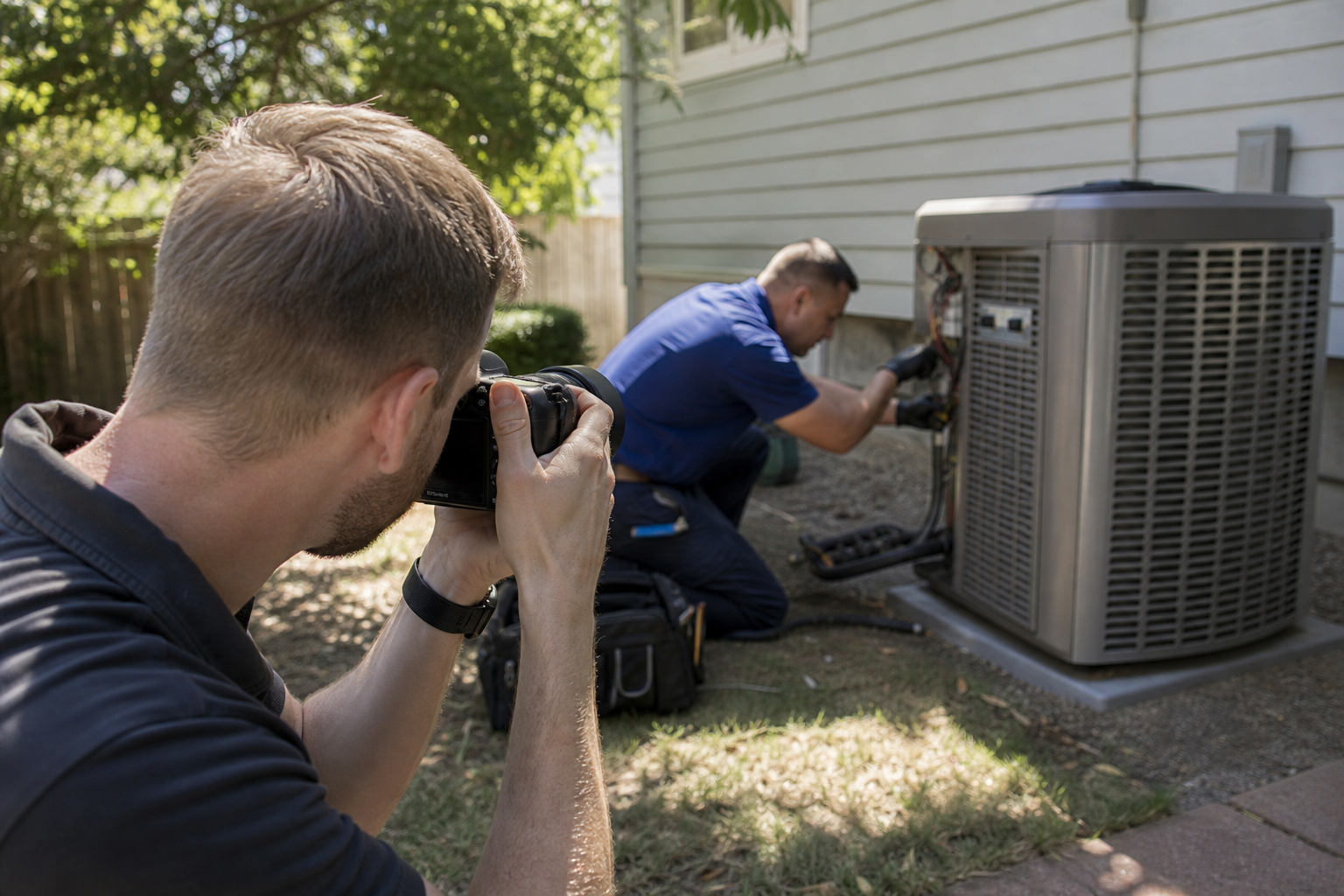
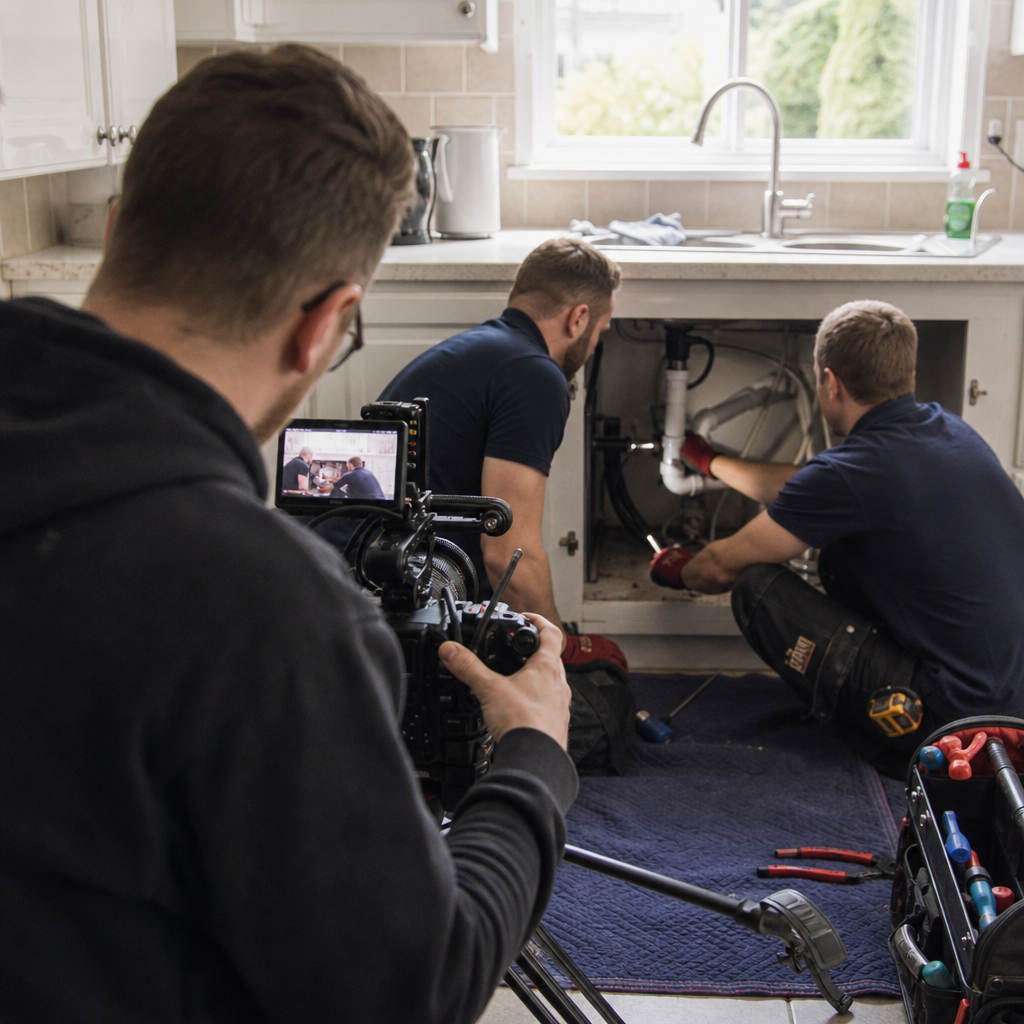
- Hire a Pro for One Day: Find a local photographer. Have them follow a crew for 4 hours. You’ll get 100+ high-quality images that will last you a year for less than the price of a single water heater install.
Stop hiding behind a shutterstock curtain. Your customers want to buy from you, your team, and your expertise. Give them the chance to see it. If you’re ready to stop looking like a generic franchise and start looking like the local authority, it’s time to get real. Reach out to Hard Labor Marketing today, and let’s build a brand that actually converts.