

The game has changed, and most contractors are still playing by rules from 2018. If you think SEO is just about stuffing "AC Repair [City Name]" into your footer and hoping for the best, you’re already losing leads to the machine.
Google isn’t just a list of links anymore. It’s an answer engine. Between ChatGPT, Perplexity, and Google’s own AI Overviews (SGE), homeowners aren't scrolling through ten blue links. They’re asking, "Who’s the most reliable plumber in Phoenix for tankless water heaters?" and the AI is giving them a single, definitive answer.
If the AI doesn't know you, you don't exist. It’s that simple. To the AI, your "brand" isn't your logo or your expensive truck wrap. It’s the digital footprint you’ve left across the web that proves you are a legitimate, high-quality authority in your market.
The Shift from "Keywords" to "Entities"
Traditional SEO was about keywords. AI search is about entities. An entity is a "thing" the AI recognizes as a real, verifiable business with specific attributes.
Think of it like a background check for a job. The AI doesn't just look at your resume (your website); it calls your references (reviews), checks your professional licenses (directories), and looks at your social media to see if you actually do what you say you do.
If 400 people on Google Reviews say you’re the best at "emergency drain cleaning," the AI marks you as an authority for that specific service. If your website is the only place saying you're great, the AI assumes you're lying or just loud.
How AI Decides Who Wins the Lead
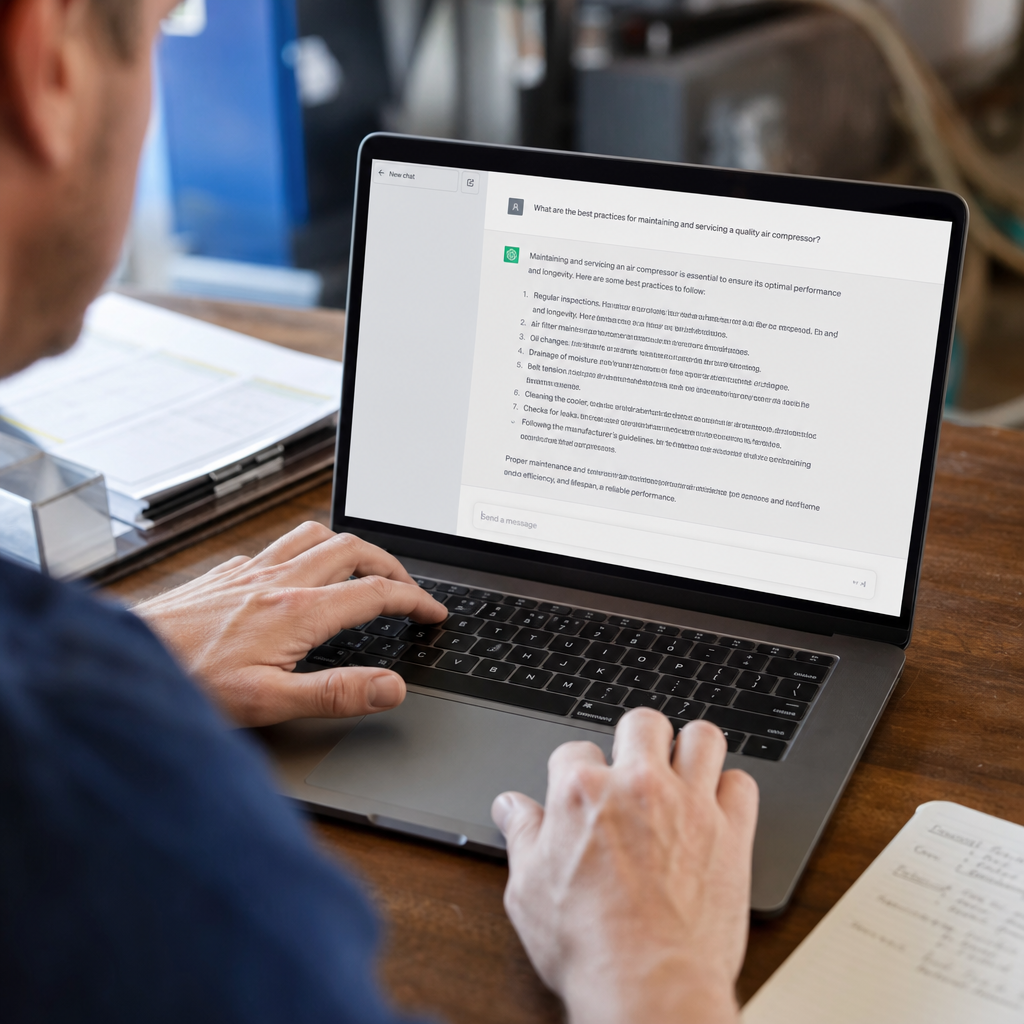
When a homeowner asks an AI "Who should I call for a furnace replacement?", the AI scans millions of data points in milliseconds. It prioritizes three things: Veracity, Volume, and Sentiment.
- Veracity: Does the information across Google, Yelp, Facebook, and your site match? If your phone number is different on three sites, the AI loses trust.
- Volume: How much is being said about you? A company with 500 reviews will almost always beat a company with 50 in an AI summary.
- Sentiment: It’s not just stars. The AI reads the text of your reviews. It looks for words like "honest," "on time," and "fair price."
Old Search vs. AI Search
| Feature | Old School Google (10 Blue Links) | AI Search (Overviews & Chat) | | :--- | :--- | :--- | | User Action | Clicks a link, hunts for info | Reads a summarized answer | | Trust Factor | Whoever has the most "backlinks" | Whoever has the best reputation/reviews | | Content Type | Short, keyword-heavy pages | Deep, helpful, expert content | | Result | You hope they pick you from a list | The AI recommends you specifically |
Why Your "Technical" Website Matters Less Than Your Reputation
You can have the fastest website in the world, but if your digital reputation is thin, the AI will ignore you. This is why your truck wrap isn't a brand. A brand is what people say about you when you're not in the room-and the AI is eavesdropping on every single conversation.
To win in an AI-driven world, you have to be "un-ignorable." This means your Google Business Profile needs to be a fortress of social proof. You need long-form reviews where customers mention specific services and technicians by name.
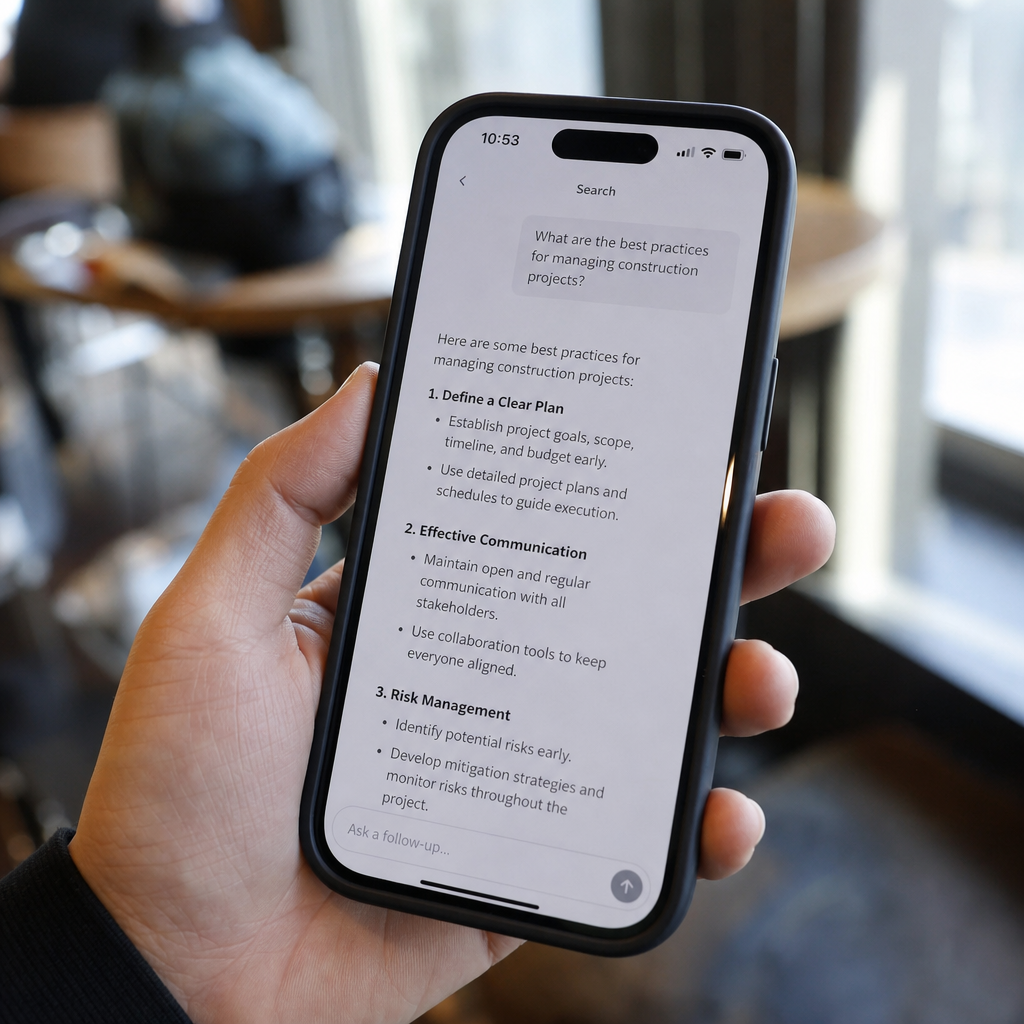
The AI uses these reviews to build a "trust graph." If homeowner "John Smith" writes a 4-paragraph review about how your tech, Mike, saved his basement from a flood at 2 AM, that becomes a high-value data point that the AI uses to recommend you for "emergency plumbing" queries.
Creating Content for Humans (That Robots Love)
The biggest mistake contractors make is writing for the algorithm. AI is now smart enough to recognize "fluff." If your blog posts are 300 words of generic garbage about "the importance of HVAC maintenance," you’re wasting your time.
AI search looks for E-E-A-T: Experience, Expertise, Authoritativeness, and Trustworthiness.
Show the AI you have these by:
- Using Real Photos: Stop using stock photos of generic technicians. Why real photos and video aren't a luxury is simple: they prove you are a real local business doing real work.
- Niche Specificity: Instead of "We do HVAC," write about "How to choose a heat pump for a 1920s bungalow in [Your City]."
- Video Content: Transcripts of videos where you explain a complex repair provide a massive amount of "authority data" for AI to ingest.
The "CPL" of Obscurity
Failure to adapt to AI search doesn't just hurt your ego; it kills your margins. When you don't show up in the AI Overview, you're forced to pay more for Google Local Services Ads (LSA) and PPC.
Currently, the Cost Per Lead (CPL) for HVAC and plumbing via organic search is typically 60-80% lower than paid ads. If you lose that organic "AI recommendation" spot, your customer acquisition cost (CAC) will skyrocket. You’ll be bidding against the big private-equity-backed shops for every single phone call.
The 5-Second Rule Still Applies
Even if the AI recommends you, the homeowner is still going to click through to your profile or site to verify. You have a tiny window to seal the deal. We see it all the time-why homeowners pick their contractor in 5 seconds usually comes down to visual proof of quality.
If the AI says you're the best, but your website looks like it was built in 2005 and has zero photos of your actual team, the trust is broken instantly. The AI gets you to the door; your brand gets you into the kitchen.
Hard Labor Tactics for AI Dominance
Stop chasing "rankings" and start building "authority." Here is your checklist for the next 90 days:
- Audit Your NAP: (Name, Address, Phone) - Use a tool to make sure every directory on the web has your business info exactly the same. Zero discrepancies.
- Review Mining: Train your techs to ask customers to mention the service and the city in their Google review. "They fixed my AC in Dallas" is 10x more valuable than "Great service."
- Kill the Stock Photos: Delete every photo of a smiling person holding a wrench that doesn't actually work for you. Replace them with high-res shots of your team on job sites.
- Structured Data: Have your web guy implement "Schema Markup." This is a piece of code that tells the AI exactly what you do, where you are, and what your prices or ratings are in a language it speaks fluently.
AI search isn't coming; it's here. You can either be the company the AI recommends as the local expert, or you can be the company that pays Google $150 every time the phone rings. The choice is yours.
Ready to stop gambling with your leads and start building real brand authority? Stop wasting money on "SEO packages" that don't move the needle. Let’s talk about a strategy that actually puts your crews in more driveways.