Brand vs Direct Response: What Trades Actually Need

Hard Labor Marketing logo
Hard Labor Marketing Team

Marketing for blue-collar and home service businesses

Updated Oct 22, 2026

Published Jun 20, 2026

When to prioritize brand authority vs cranking calls - blunt timelines and budget splits for each stage of a blue-collar business.

Brand vs Direct Response: What Trades Actually Need
The short answer

Trade shops need both direct response and brand marketing, but the split depends on current revenue. Direct response brings immediate leads through channels like Google Local Services Ads and pay-per-click to pay bills today. Brand awareness lowers lead costs and builds long-term authority through wrapped trucks, local SEO, and video. Shops under $1M should spend 90% on direct response to protect cash flow. Larger shops split budgets to prevent rising lead costs and generate branded search demand.

Key takeaways

  • Direct response is immediate oxygen that drives calls within 24 to 48 hours. It keeps your trucks rolling through channels like Google Local Services Ads, paid search, and targeted mailers. Without it, your techs sit idle and you risk running out of cash.
  • Brand awareness acts as insulation that keeps cost per lead from spiking as markets get crowded. Customers who recognize your trucks or name click your ads more often and trust your shop. Over time, strong brand equity lets you charge higher rates than competitors without losing business.
  • Budget allocation should change as shop revenue grows. Shops under $1M should focus 90% of their spend on direct response to survive. Companies between $1M and $5M shift to a 70/30 split, while shops over $5M split budgets 50/50.
  • Running brand campaigns during the slow shoulder season is a major mistake. When demand drops and call volumes stall, you must hunt aggressively with direct response marketing instead of waiting on passive awareness.
  • Measuring cost per lead by channel is essential to avoid wasting marketing dollars on vanity metrics. Reach and impressions do not pay technicians or purchase parts. Track real lead costs so direct response generates the cash needed to fund brand authority.

How we judge this

  • 1Immediate lead generation
  • 2Impact on lead cost
  • 3Revenue stage fit
  • 4Tracking clarity

Direct Response Marketing · Best for immediate leads and daily cash flow

Direct response uses Google Local Services Ads, PPC, and targeted mailers with call-now offers. It delivers calls within 24 to 48 hours to keep technicians working. This strategy protects your immediate payroll and solves emergency customer needs.

Brand Awareness Marketing · Best for lowering long-term customer acquisition costs

Brand marketing relies on wrapped trucks, community events, local radio, and billboards. It builds recognition over 6 to 12 months so prospects think of your shop first. This presence increases ad click-through rates and allows you to charge premium prices.

Survival Phase Strategy · Best for shops under $1M in revenue

This plan puts 90% of marketing spend into direct response channels like Google LSA and PPC. Clean uniforms and wrapped trucks serve as your main brand elements. The primary goal is capturing emergency calls to maintain positive cash flow.

Growth Phase Strategy · Best for shops between $1M and $5M in revenue

This approach splits marketing spend into 70% direct response and 30% brand authority. Shops invest in local SEO, team video content, and targeted billboards in top zip codes. It prevents lead costs from rising as search competition increases.

Dominance Phase Strategy · Best for shops over $5M in revenue

This strategy balances marketing 50/50 between direct response and brand authority. Shops create demand so customers search for their specific company name instead of generic service terms. Brand searches drive your customer acquisition cost toward zero.

ApproachImmediate LeadsImpact on CPLPrimary TacticsBest Revenue Stage
Direct Response24 to 48 hoursDirect CPL controlGoogle LSA, PPC, mailersAll stages (vital under $1M)
Brand Awareness6 to 12 monthsLowers CPL over timeTruck wraps, radio, billboards$1M and above
Survival StrategyImmediateCaptures baseline CPLGoogle LSA, search adsUnder $1M
Growth StrategyOngoingCounters rising CPLLSA, local SEO, team video$1M to $5M
Dominance StrategyImmediate and long-termDrives CPL toward zeroPPC, brand search, billboards$5M+

Stop listening to agency "gurus" who tell you that a pretty logo and a nice color palette will pay your payroll this Friday. They won’t. But don't swing too far the other way and think that purely buying leads is the only way to scale.

Most HVAC and plumbing owners get caught in a "pissing contest" between Brand Awareness and Direct Response. One side says you need to look professional to build trust; the other says if the phone isn't ringing, you’re dying.

The truth? You need both, but you need them at different times and in different doses. If you're a $500k shop, your strategy should look nothing like the $10M shop across town.

Direct Response: The Oxygen of Your Business

Direct response marketing is simple: You put a dollar in, and you get a lead out. Now. It’s the "emergency" side of the trades. When a furnace kills over in January or a toilet overflows at midnight, customers aren't looking for a brand they "identify" with-they are looking for a phone number.

Direct response is your oxygen. Without it, your trucks sit idle and your techs quit to go work for the guy down the street who actually has work. This usually looks like Google Local Services Ads (LSA), PPC, or targeted mailers with a "Call Now" offer.

If you’re currently struggling with empty boards, stop worrying about your Instagram aesthetic and fix why your marketing isn't working by shifting every cent into high-intent search.
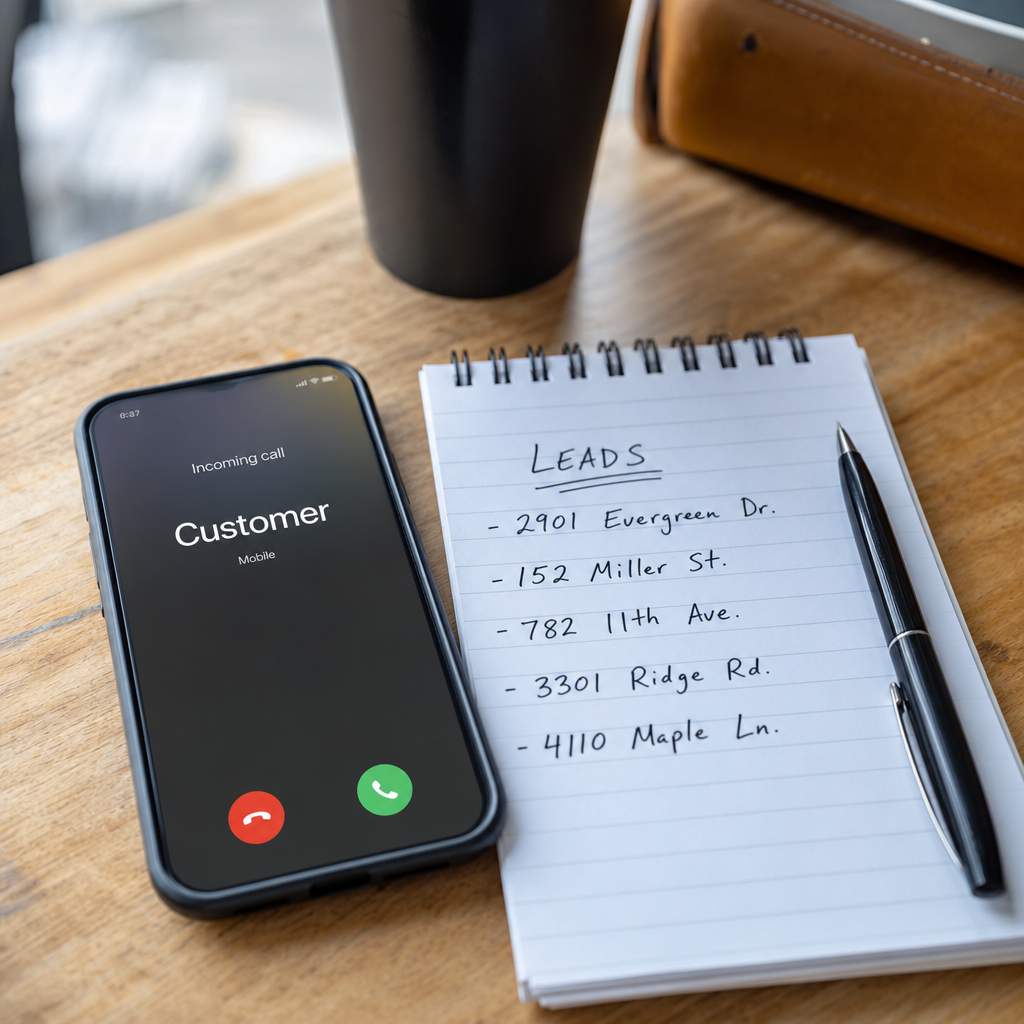
A close-up of a phone ringing on a wooden desk next to a notepad with handwritten leads, p

Brand Awareness: The Moat Around Your Business

If Direct Response is oxygen, Brand is the insulation. It keeps your lead costs from skyrocketing when the market gets crowded.

Brand awareness isn't about being "famous." It’s about being top of mind. It’s the reason a customer clicks your Google Ad instead of the three guys above you-because they’ve seen your wrapped trucks or heard your name on the local radio.

When you have a strong brand, your Cost Per Lead (CPL) drops because your click-through rate goes up. People trust names they know. If you only play the Direct Response game, you are a commodity. You are forced to compete on price, and that is a race to the bottom.

The Breakdown: Brand vs. Direct Response

| Feature | Direct Response (Performance) | Brand Awareness (Authority) | | :--- | :--- | :--- | | Goal | Immediate Leads / Sales | Recognition / Trust / Longevity | | Tactics | Google LSAs, PPC, Facebook Ads | Wrapped Trucks, Community Events, Billboards | | Timeline | Instant (24-48 hours) | Long-term (6-12 months) | | Metric | CPL (Cost Per Lead) | Search Volume for your Business Name | | Risk | Expensive if you don't optimize | Hard to track immediate ROI |

The "Checkbook" Analogy

Think of your marketing like a bank account. Direct Response is your checking account. You use it to pay the bills, handle emergencies, and keep things moving day-to-day. You need it liquid, and you need it now.

Brand is your 401(k) or high-yield savings. You don’t see the benefits today. You might even feel "annoyed" that you’re putting money into it instead of spending it. But in five years, that brand is what allows you to charge 20% more than the "trunk slammer" down the road and still stay busy.

If you only have a checking account, one bad month can wipe you out. If you only have a 401(k), you’ll starve to death before you reach retirement. You need both to survive.

A team of three trades workers in matching navy uniforms standing in front of a clean serv

Where Should You Spend Your Next Dollar?

Your budget split depends entirely on your current revenue and your "capacity" (how many techs you have sitting on their hands).

1. The Survival Phase ($0 - $1M Revenue)

At this stage, you are 90% Direct Response. You need cash flow. You don't have the luxury of "building a brand" over two years. Your "brand" is your wrapped truck and a clean uniform.

  • Focus: Google LSA and PPC.
  • Goal: Capture the low-hanging fruit and the "emergency" calls.

2. The Growth Phase ($1M - $5M Revenue)

Now you start to feel the "Lead Ceiling." Your CPL on Google is starting to creep up because everyone is bidding against you. This is where you split the budget 70/30.

  • Focus: 70% Direct Response, 30% Brand Authority.
  • Tactic: Start investing in local SEO, video content showing your team's faces, and perhaps a few strategic billboards in your highest-profit zip codes.

3. The Dominance Phase ($5M+ Revenue)

At this level, you are the big dog. You move to a 50/50 split. Why? Because you’ve tapped out most of the "immediate" search volume. To grow further, you have to create demand. You want people to search for "[Your Company Name] Plumbing" instead of just "Plumber near me."

When someone searches for you by name, your CPL is basically zero. That’s how you win.

The Danger of "Brand Only" in the Slow Season

When the weather is mild and the phones go quiet, many owners panic and start "branding" because they think people forgot about them.

Wrong move. During the shoulder season, you need to double down on aggressive direct response tactics. You need to hunt. Check out our guide on how to get more HVAC leads in your slow season to see how to pivot those budgets when the "easy" calls disappear.

Stop Guessing and Start Measuring

If you can’t tell me your CPL by channel, you aren't marketing; you’re gambling. Stop letting agencies sell you "impressions" and "reach." Those are vanity metrics that don't buy vans or pay for copper.

Brand is the force multiplier, but Direct Response is the force.

Build your authority so people know who you are, but keep your foot on the gas of performance marketing so you have the profit to buy that authority in the first place.

Ready to stop throwing money at "pretty" marketing and start actually filling your board? Contact Hard Labor Marketing today. We don’t do fluff, we don't do "awareness" campaigns that don't convert, and we sure as hell don't waste your time. Let’s build a strategy that actually works for your shop.

Case study

Carey Brothers Welding & Fabrication

The first website in 14 years, built to win primary contracts

FAQ

Frequently asked questions

Why should a shop under $1M avoid heavy brand marketing?

Shops under $1M need immediate cash flow to meet payroll and keep trucks moving. Direct response channels like Google LSA capture existing emergency demand right away. Brand campaigns take 6 to 12 months to mature, which can drain cash from a small shop.

How does brand awareness lower cost per lead?

When prospects recognize your company name or wrapped trucks, they click your ads over competitors. This familiarity raises your click-through rate on search platforms. High trust keeps direct response costs lower as market competition increases.

What should trade shops do during the slow shoulder season?

Double down on aggressive direct response marketing rather than spending on general branding. Shoulder seasons require active hunting for immediate work to keep schedule boards full. Waiting for passive brand awareness will leave technicians without jobs.

When should a shop start allocating budget to brand marketing?

Once revenue reaches between $1M and $5M, allocate roughly 30% of your budget to brand authority. Start with local SEO, video content featuring your team, and billboards in high-profit zip codes. Keep the remaining 70% focused on direct response.

What metrics should I track to judge marketing performance?

Focus primarily on cost per lead across each marketing channel rather than impressions or reach. For direct response, track immediate lead volume and acquisition expenses. For brand authority, monitor search volume for your specific company name.