

You paid for the lead. You put in the work to get the phone to ring or the form to hit your inbox. Then, the prospect disappears into thin air.
Most owners blame the lead quality. They say the leads are "trash" or "just tire kickers." Sometimes that’s true, but 80% of the time, the lead didn't ghost you because they weren't interested. They ghosted you because you weren't fast enough, persistent enough, or professional enough.
In the trades, speed is the only currency that matters when it comes to digital leads. If you aren't the first person to call, you're the first person to be ignored.
The Brutal Reality of Speed-to-Lead
Think of a lead like a fire alarm. When that notification hits your phone, the house is on fire. If you wait thirty minutes to grab the hose, the roof has already collapsed.
Research shows that if you contact a lead within five minutes, you are 100 times more likely to connect with them than if you wait thirty minutes. If you wait an hour? You might as well set your marketing budget on fire.
The homeowner is sitting on their couch with their phone in their hand right now. They just looked at three of your competitors. The first one to provide a human response wins the job 78% of the time.
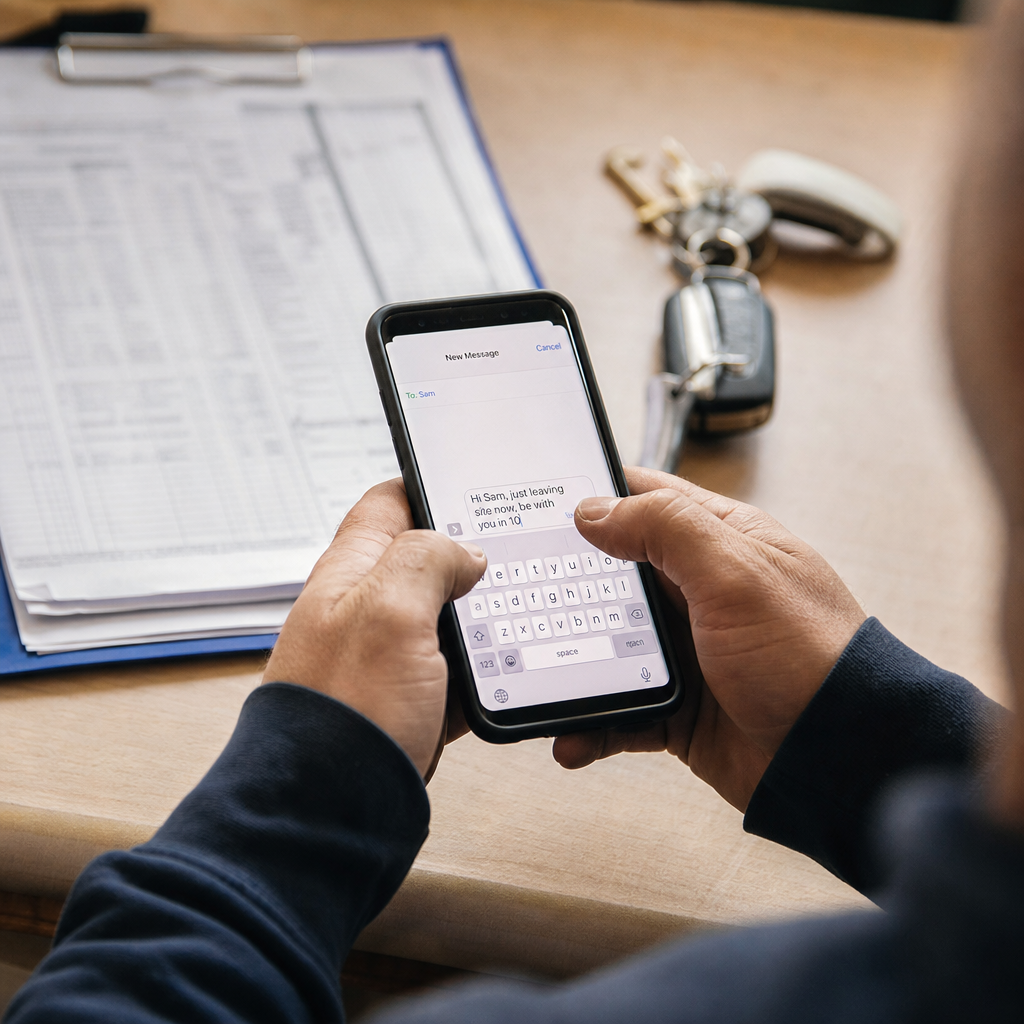
Why Phone Calls Aren't Enough Anymore
If you only call, you're losing money. People don't answer unknown numbers. Between spam filters and "Silence Unknown Callers" settings on iPhones, your outbound call is likely going straight to digital purgatory.
You need a multi-channel approach. This means:
- The Immediate Call: Dial within 120 seconds.
- The Instant Text: If they don't answer, text immediately. "Hey, this is [Name] with [Company]. Just saw your request for an AC repair. Do you have 2 minutes to chat?"
- The Email Backup: Send a professional email with a clear subject line.
A text message has a 98% open rate. A phone call from a random number has about a 15% chance of being answered. If you aren't texting your leads, you aren't marketing in the 21st century. This is why HVAC marketing often fails-not because the ads are bad, but because the follow-up is stuck in 1995.
The "Day One" Cadence: A Comparison
Most contractors call once, leave a voicemail, and give up. That is a waste of a $50–$150 lead. Here is the difference between a "Budget Killer" and a "Profit Maker" follow-up schedule:
| Effort Level | Day 1 Actions | Day 2 Actions | Result | | :--- | :--- | :--- | :--- | | The Average Guy | 1 Call, maybe a voicemail. | Nothing. | 15% Lead Conversion | | Hard Labor Method | 2 Calls, 2 Texts, 1 Email. | 1 Call, 1 Text. | 45%+ Lead Conversion |
If you think texting three times in two days is "annoying," you're wrong. It’s professional. You are solving a problem they asked you to solve. Stop being polite and start being helpful.
Real Specifics: The Script That Works
Don't overcomplicate the messaging. You aren't writing a novel; you're trying to get a "Yes" or a "No."
Text 1 (Immediate - No Answer): "Hi [Name], this is [Your Name] from [Company]. I tried calling about your plumbing request but missed you. Are you still looking for help with that leak today?"
Text 2 (3 Hours Later): "[Name], just following up. We have a tech in your area this afternoon. Would you like me to send him over to take a look?"
Text 3 (Next Morning): "Good morning [Name]. Just wanted to check in one last time on that water heater. If you’re all set, no worries. If not, let me know!"
Notice the tone: Helpful, direct, and low-pressure. If you're struggling to keep momentum, especially during the HVAC slow season, this intensity is what keeps the schedule full.

CRM Habits: If It Isn't Logged, It Didn't Happen
If you're managing leads out of your "Recent Calls" log or a yellow legal pad, you're hemorrhaging cash. You need a CRM (Customer Relationship Management) tool. Whether it’s ServiceTitan, Housecall Pro, or a simple LeadConnector setup, you need a single source of truth.
The Golden Rules of Lead Management:
- Status Everything: Every lead is either "New," "Attempted Contact," "Booked," or "Dead."
- No Lead Left Behind: Every "New" lead must be touched within 5 minutes or it's a failure.
- Automate the "Busy Work": Use your CRM to send the first text automatically the second a form is filled out. This buys you time to get to a phone.
When deciding where to spend your money-like choosing Google LSA vs Google Ads-you have to know your numbers. You can't know your numbers if your lead data is scattered across three different iPads.
The "I'm Too Busy" Trap
The most common excuse from owners is "I'm in the field, I can't answer that fast."
If you're too busy to answer the phone, you're too busy to grow. You have three choices:
- Hire an Admin/CSR: Someone whose sole job is to answer the phone on the first ring and text leads within 60 seconds.
- Use an Answering Service: A 24/7 service that can live-transfer leads to you.
- Automate: Use marketing software that triggers an AI or automated text sequence immediately.
Growth doesn't happen when you work harder in the attic; it happens when you build a system that captures the work while you're in the attic.
Stop Blaming the Leads
The leads aren't "bad." Your window of opportunity is just small.
If a homeowner goes to Google and types in "emergency plumber," they are going to call the first three companies they see. If you call them back three hours later and they don't answer, it’s because they’ve already booked a guy who’s arriving in twenty minutes. They didn't ghost you-you were never even in the game.
Tighten your follow-up, get a text-first culture in your office, and treat every lead like a $1,000 bill sitting on the sidewalk. You wouldn't walk past a grand on the ground because you were "too busy," so don't do it with your marketing.
Ready to stop wasting your marketing budget on leads you never talk to? You need a system that handles the grunt work of follow-up so you can focus on the job. Let’s talk about building a lead-to-call machine that actually works for your business. Contact Hard Labor Marketing today.